Digital transformation can mean a lot of different things. For leaders, it can be hard to know where you should be focusing investment — and what kind of digital transformation you’re really after. The authors outline four pillars of digital transformation: IT uplift, digitizing operations, digital marketing, and new ventures. Which pillar is the right starting point for your company depends on your context, needs, but also your digital maturity. Despite years of discussion, understanding what digital transformation means for established companies remains a daunting challenge. Leaders put in charge of a digital transformation feel pulled in many different directions, with competing demands from IT, marketing, sales, and operations. Without a clear understanding, the wrong people are often put in charge, with the wrong resources, and the wrong KPIs, setting the digital transformation project up for failure. The key to cutting through the confusion is to see that digital transformation is not a single thing, but a multi-faceted journey with differing goals depending on your industry and digital maturity. Just as we had to evolve our view of computers after their introduction — from a device performing a narrow set of tasks at the edge of the organization to one that performs many tasks, in many different ways — so it is time to evolve our view of digital transformation, from a monolithic concept to understand that digital transformation means many different things for different parts of the organization. Doing so will help you articulate what kind of digital transformation you’re really talking about, and plan accordingly. Based on our collective research on companies undergoing digital transformation, we offer a simplifying framework to cut through the confusion and conflicting demands. The framework outlines the four pillars of digital transformation we see today: IT uplift, digitizing operations, digital marketing, and digital businesses. All four are part of most companies digital transformation journey. But without understanding how they are different, it’s confusing to understand what to do next or how to invest — the resources, tools, goals, C-Suite sponsors and KPIs required for success are totally different in each case. Being clear about their differing demands can help you make smart tradeoffs and clear progress. Below we outline the four pillars and how to invest properly to set yourself up for success. Which pillar is the right starting point for your company depends on your context, needs, but also your digital maturity. Typically, companies tackle the first pillars we describe near the start of their digital transformation journey, although as they mature they may continually upgrade to add additional pillars. For many companies, digital transformation starts with upgrading the company’s IT infrastructure as well as mobile infrastructure, data lakes, and the cloud. Essentially, this is an opportunity to use budget allocated to “digital initiatives” to modernize IT and communications platforms within your enterprise. When completed, an IT uplift provides your company access to up-to-date tools that offer increased employee efficiency, lower IT maintenance costs and increased employee satisfaction. Some companies are already deep into this journey, but many other companies struggle with questions about how to upgrade the digital infrastructure. Often this is the first step on the digital journey. It requires IT architects and time, but promises up-to-date platforms with more effective tools to serve customers at lower cost of maintenance. But for more mature digital companies, investment is still required to use advanced tools such as artificial intelligence. Typically, the CIO or CTO should lead this pillar of digital transformation and the KPIs to indicate success are access to new tools, reduced maintenance costs, improved employee satisfaction, and better business performance. In support of this, recent research from IDC indicates that organizations which had begun an ERP cloud migration as part of a digital transformation initiative prior to the COVID-19 pandemic fared far better than organizations that didn’t. A second critical pillar of digital transformation, often tackled earlier in the digital transformation journey, is using digital for optimizing, simplifying, and rationalizing existing processes. The goal here is to use digital tools, including more advanced technologies such as AI, 5G, and IOT, to streamline business growth. In its most basic form, this pillar can mean swapping out analog activities with digital ones. But other times it involves rearchitecting the system to meet the needs of today customers. For example, in the past when PayPal sent payments via email, they had significant time to ensure regulatory compliance. But to enable the instant payments demanded in today’s market required rearchitecting the PayPal’s organization, merging once separate divisions for payments and compliance into one entity. This is more than just swapping analog processes for digital ones; it is about rearchitecting the organization and the digital operations to serve customers better. Digitizing operations is a fundamental pillar of digital transformation in the sense that, without it, your company will be left behind by more efficient operators. A company may begin its digital transformation journey by digitizing processes and as it matures, rearchitect processes entirely. As a company rearchitects their processes, they also start to unlock more transformational possibilities. For example, when a European retailer changed its platform to serve customers better, it discovered it could also offer other retailers’ products with their improved ecommerce platform and digitized logistics, enabling the retailer to create an ecosystem of products and services from third party sellers to offer to their customers. Because of the need to understand how the business works, digitizing operations often fares better when led by the CFO or COO. It does require time and technology but the benefits, measured by the central KPIs, are savings in time, money, and people to solve business problems and serve customers. If you are looking for digital solutions to win clients, build brand awareness, profile clients or simply sell online, then you are pursuing the digital marketing pillar. This pillar is different from the others in its focus on digital tools to interact and sell to customers. Not surprisingly, it requires different resources, such as investing in capturing clean data, digital tools including artificial intelligence to understand customers, and omnichannel presence. Several global retailers are using digital channels, AI and predictive analytics to access prospects and customers, set up digital marketplaces, viral campaigns, and geo targeting campaigns. Likewise, companies are using artificial intelligence to identify and act on critical customer behaviors, for example, identifying customers likely to leave your service and then intervening before the do so. Typically, the CMO leads this initiative and should focus on KPIs such as return on marketing investments, reduction customer acquisition costs, and generation of a large amount of valuable data that can be used to acquire new customers and better serve existing customers. Finally, digital opens up many new opportunities for established companies. Seizing these opportunities, some of which may be quite disruptive, requires both developing the innovation and digital capabilities to test and pivot to new sources of growth. Digital may provide the opportunity to create new business models, new products and services, or even collaborate with a large ecosystem to create new sources of growth. Typically the CEO, or head of sales, leads such initiatives because of the requirement for investment, agility, but most importantly a team capable of running experiments to validate the new business opportunity. The payoff is new sources of revenue, but the KPIs are more nuanced, typically unit economic measures that you are creating solving a significant customer problem and growing profitably. Most businesses have these opportunities at hand but seizing them requires a greater digital maturity than for an IT uplift or digitizing processes. For example, a large retail bank which we studied entered a range of different industries, such as transportation (ride sharing), content distribution (music and TV), e-health and retail marketplace just to name a few. The first deputy CEO was in charge of this transformation and be built a team that contained individuals with strong innovation capabilities, which tested and built each new business. As part of the digital function, executives were also tasked with digitizing the entire ecosystem as well as a separate department with a task to build and maintain the resulting ecosystem. To measure whether they are succeeding, the bank carefully analyzes their ability to increase customer retention in the core financial services business but more importantly, for the new businesses, measure number of daily/monthly average users, engagement, and cross-selling opportunities. Everyone who has been part of digital transformation describes it as a journey. Digital transformation takes time, and is a series of evolutionary, and occasionally disruptive, steps. Like in any journey, you need to decide where to go first. Typically, companies begin with IT uplift and digitizing operations, followed by digital marketing and new business building. But all four pillars are important to digital transformation, so they may happen in another order. The key to success is simply getting clarity that digital transformation is not one thing, but rather many different things. Having the right leader, resources, and measures of success for the journey towards each different pillar can contribute greatly to success.
Understanding the difference between ERP and material requirements planning is important to getting the most out… Enjoy this article as well as all of our content, including E-Guides, news, tips and more. You forgot to provide an Email Address. This email address doesn’t appear to be valid. This email address is already registered. Please log in. You have exceeded the maximum character limit. Please provide a Corporate Email Address. Please check the box if you want to proceed. Please check the box if you want to proceed. By submitting my Email address I confirm that I have read and accepted the Terms of Use and Declaration of Consent. of these systems. Today’s ERP evolved from yesterday’s MRP systems, which were focused on calculating material requirements and grew from there to incorporate more of the manufacturing enterprise. Remnants of MRP still form the backbone of most ERP systems, but the two are very different and operate in connected yet nonetheless distinct realms. As its name suggests, MRP is focused on planning, scheduling, ordering and tracking the raw materials and components needed for the manufacturing process. In contrast, ERP encompasses a much wider range of business functions, such as accounting, financial management, human resources, customer relationship management and inventory management. ERP is an integrated software suite that manages the majority of company information, while MRP is one application, or module, in that suite. Nearly every ERP system includes a basic MRP module. Of the two, ERP is the more dominant system on the software market today. The key to understanding the difference between ERP and MRP is to trace the evolution of the software category to which both belong from its inception more than half a century ago. Early mainframe computers were used only for straightforward calculations and simple storage, retrieval and sorting of data. The breakthrough for the manufacturing industry came with the development of a way to recognize relationships between raw materials, parts, assemblies and products — the bill of materials that is the basis of material requirements planning. This article is part of Download this entire guide for FREE now! MRP is a calculation of what parts and materials are needed to make a subassembly or product, as well as when those components are needed based on the due date for the final product. MRP considers inventory balances and availability, production and purchasing lead times and current order status, as well as forecasts and customer orders that drive the master production schedule. Building on this framework, software developers created inventory management, production control, customer order management and purchasing applications integrated into a comprehensive software suite that also included accounting applications, resource and production planning and scheduling. While the first generation of these systems were known simply as MRP, eventually the name was changed to manufacturing resource planning or MRP II. Although MRP II and ERP were originally designed for manufacturing companies, these systems contain significant functionality that supports many different kinds of businesses, from distribution and retail to services, hospitals, insurance companies and more (see the chart). Software developers added functions such as point-of-sale, service billing, document management, business intelligence and workflow, to appeal to these broader markets. ERP is now available for every kind of business, not just manufacturing. MRP II continued to grow year after year as the integrated applications matured and expanded and others were added. These improvements — along with adaptations to take advantage of computing advances like relational databases, natural language query and optimization technologies — were not reflected in the market’s perception of MRP II, which was seen as old and outdated. Thus, a new acronym was invented: ERP, for enterprise resource planning. Today, the term MRP II has virtually disappeared and all such systems are called ERP. However, the term MRP is sometimes used incorrectly to refer to inexpensive, less capable manufacturing software suites marketed to small companies. Many modern ERP systems today are developed as cloud-based applications and nearly all offer cloud deployment as an option. Cloud ERP is considered to be the most flexible, easiest to implement and most scalable type of ERP. ERP systems generally consist of modular applications that each address a specific business process. For example, in addition to the core modules that support basic records, such as product items, bills of materials and resources, a manufacturer’s ERP will have modules for the following: Most systems have additional modules that make the system more complete. These include human capital management (HCM) and support for business functions that not every company needs, such as field service management, deep quality management capabilities, as well as advanced and finite scheduling. The ability to mix and match these optional modules provides a way to tailor the system to fit specific industries like food and beverage, industrial equipment, electronics, consumer goods or process manufacturing. The modular design also makes a “standard” ERP system more adaptable to the needs of nonmanufacturing companies. An accounting or consulting firm, for example, would not need material planning, production scheduling or inventory management but would need schedule (calendar) management, document management, service billing, HCM and general accounting. Although MRP II and ERP were developed to support the information management needs of manufacturers and distributors, more recently, ERP has become the general name for any integrated business management application suite. You can now find ERP systems for retail, service businesses, wholesale distribution, utilities, hospitals and just about any other kind of business you can think of. These ERPs usually contain the same or similar functionality for the basic processes that all businesses share, such as customer order management, billing and collection, financial management and accounting, payroll and HR. In addition, they support specific needs of the business, like shop floor control, dispatching personnel and vehicles, scheduling appointments or tracking service use. Keeping in mind that MRP is a specific function or module within an ERP suite, MRP is the backbone of the system and the thing that brings the entire manufacturing business together in a coordinated effort toward the overall goal of delivering quality products to customers on time. MRP, in conjunction with master scheduling, turns the demand plan (forecast and orders) into specific tasks for production, procurement, resource management and the rest of the enterprise. The rest of the system then tracks and manages the execution of those tasks. As such, MRP directly contributes to: The main purpose of ERP is to: Because the software basically models the operation of the enterprise, it can offer additional insight into the cause and effect of relationships between activities and decisions across functional areas of the business, enabling more effective and efficient operations. It has been said that information is power, and in today’s business world, managing and exploiting information is critical. ERP encompasses the entire enterprise, bringing the various functions together to coordinate their activities and decisions and keep them focused on achieving the ultimate purpose of the enterprise, which is to generate a profit by delivering the goods and services customers expect in the most economical way. The real question is not, what are the benefits of ERP? Rather, it’s how can a modern company ever expect to operate effectively without control over its information and the decision-support functions provided by ERP? Oracle plans to acquire Cerner in a deal valued at about $30B. The second-largest EHR vendor in the U.S. could inject new life … The Supreme Court ruled 6-2 that Java APIs used in Android phones are not subject to American copyright law, ending a … This handbook looks at what Oracle Autonomous Database offers to Oracle users and issues that organizations should consider … The database-as-a-service vendor advanced the change data capture capabilities of its cloud database with technology from its … The database-as-a-service platform vendor looks to make it easier for developers to build data-driven applications and revert … The open source Apache Pinot OLAP data store is set to become easier to deploy, manage and operate in the cloud with improved … Because customizations have long-term implications, organizations currently running SAP ECC as their core ERP system must give … Many companies can benefit from analytics’ capabilities, and organizations staying on SAP ECC can still create an effective … Implementing S/4HANA comes with significant risk — yet it also offers a real opportunity for digital transformation. Here’s the … The past two years have shown the vital role of analytics, and even as some COVID-19 restrictions ease, many organizations now … Organizations are adopting a collaborative analytics model to tap the full potential of their workforces and increase data … The vendor’s platform update highlights its focus on applications as a way to extend analytics to more business users and expands… Good database design is a must to meet processing needs in SQL Server systems. In a webinar, consultant Koen Verbeeck offered … SQL Server databases can be moved to the Azure cloud in several different ways. Here’s what you’ll get from each of the options … In this book excerpt, you’ll learn LEFT OUTER JOIN vs. RIGHT OUTER JOIN techniques and find various examples for creating SQL … Sitecore CEO Steve Tzikakis took over during the pandemic — amid massive growth — and has reimagined the company as a digital … Organizations planning content migrations should verify file integrity and ensure files weren’t corrupted in the move. File … A successful ECM deployment requires planning. Content managers should consider their organization’s content lifecycle, security … Despite the current reality of the hybrid work model, office building owners might have to invest in amenities such as gyms and … Conducting employment background checks on existing employees and contractors is a growing trend. But the practice raises ethical… Vodafone, the U.K.’s telcommunications giant, has upgraded its recruiting tech with automation that will analyze resumes and CVs … All Rights Reserved, Copyright 2017 – 2022, TechTarget
Charlotte, North Carolina, USA , Oct. 14, 2021 (GLOBE NEWSWIRE) — Confianz Global, Inc. North Carolina’s multi-award-winning ERP implementation company, announced that it has launched their Odoo-ShipStation Connector with advanced features. You can learn more about the Odoo-ShipStation Connector here. Confianz Global Inc. builds end-to-end integrated solutions for a complete automation experience that promotes business growth for individual startups and small and medium-sized businesses (SMBs). The ERP company has been extending customized software solutions to its clients since 2008. Confianz Global Inc’s solutions use open-source technologies and cover multiple domains, including enterprise resource planning (ERP) systems, custom web application development, custom app development for Android and iOS platforms, custom blockchain application development, as well as artificial intelligence integration. Speaking about the Odoo-ShipStation connector, Anoop Menon, the company’s CEO, said, “This is an important milestone for Confianz Global to introduce this Odoo-ShipStation Connector. We built the connector back in October 2020 and had a selected group of our customers use it in the real world to further improve it. We are partners with both Odoo and ShipStation which makes it easier for us to further improve and maintain this connector when there are API changes or new versions of software releases on either end.” Odoo (previously OpenERP) is one of the fastest-growing open-source ERP systems that is used by millions across the globe. It is a fully powered suite of business applications that lets you run your entire business using one operating system. The kind of growth Odoo has achieved in the last 16 years is impeccable. Confianz Global has been implementing and customizing Odoo ERP for the last 11 years. ShipStation is an advanced shipping platform available to businesses that allows them to manage all their small parcel and LTL shipping needs in one place. Typically, the business customer imports their orders from an online selling channel like Amazon, eBay, or other sources, sets the carrier and shipping service for the shipment, gets postage rates, and prints the labels. ShipStation notifies the selling channel and your customer of the shipment and provides tools to track shipments and manage returns. ShipStation also provides tools to manage your shipping workflow, track your processes to eliminate confusion and mistakes, and use powerful automation to minimize how much manual work you actually have to do. “The biggest risk for any business spending money on third-party connectors is how long it will work. We close this gap by partnering with both ends so that we can stay on top of the game if there are upcoming API changes making the connection fail. In many cases, online retailers are penalized if the order is not confirmed by a specific time and we have features in place to automate such processes, reducing headaches for the business owner. We also have integration available to extend this Odoo-ShipStation Connector to work with CommerceHub used by Lowe’s and HomeDepot” explained Menon. About Confianz Global Inc. Confianz Global Inc. delivers fully integrated software services to meet the unique needs of individual startups, small, and medium-sized businesses. They have grown exponentially alongside the fast-paced IT industry over the last 13 years. As a global enterprise with an established presence in the USA and India, Confianz Global Inc. provides quality software services to clients in nearly 50 countries around the world. The company’s solutions cover multiple domains, including ERP systems, custom web application development, custom app development for Android/iOS platforms, custom blockchain application development, and artificial intelligence. They build end-to-end integrated solutions for a complete automation experience that promotes business growth. For more information, visit https://www.confianzit.com/ Website: https://www.confianzit.com/ Video URL: https://www.youtube.com/watch?v=yHywBkQUQHQ
Getty Images/iStockphoto SaaS ERP software appeals to many companies because of the perceived reduction in support costs. However, some organizations considering SaaS ERP may find a system isn’t a perfect fit and begin looking into customization. Company leaders should be aware of customization’s advantages and disadvantages before embarking on it. One of SaaS ERP software’s biggest benefits is that it’s generally ready for use once an organization selects it. Some software may require some basic configurations up front, but organizations can generally use it out of the box, and it can support companies that specialize in manufacturing, retail, accounting and other areas. However, some organizations may opt to customize their platform to add needed support for additional data elements and automations. Here’s what to consider when deciding on SaaS ERP customization vs. out of the box. Organizations looking to minimize their ERP costs should likely use SaaS ERP out of the box. Doing so can also increase platform adoption speed, as the company won’t need to wait for the system customization. In addition, the organization can use the SaaS ERP vendor’s training material and videos without needing to modify them, since the company is adopting the system as is. That will also improve turnaround time for adoption and user training. However, the lack of customization means companies may need to redesign their unique business processes around their SaaS ERP. Some companies decide that the out-of-the-box SaaS ERP system is insufficient for their business needs and move forward with customization. Customization involves developing additional integrations, tools and reports or making some system changes. For example, a manufacturer may decide to customize some of their SaaS ERP inventory forms to provide support for additional custom fields that track specific items such as allergens, unit of measure or expiration date. However, one disadvantage of customizing SaaS ERP is the process length. In addition, when the ERP vendor releases new updates, the updates may conflict with a company’s custom code. When ERP vendors release new software versions, third-party integrators must often scramble to test their code and functionality with the newer versions. While this usually happens over a long period of time, allowing users and vendors to test and upgrade their code, application errors and crashes can occur due to unsupported code. Companies considering SaaS ERP customization should also look into the costs of code changes. Code changes generally require integration vendors that develop and support the customization. Oracle plans to acquire Cerner in a deal valued at about $30B. The second-largest EHR vendor in the U.S. could inject new life … The Supreme Court ruled 6-2 that Java APIs used in Android phones are not subject to American copyright law, ending a … This handbook looks at what Oracle Autonomous Database offers to Oracle users and issues that organizations should consider … The database-as-a-service vendor advanced the change data capture capabilities of its cloud database with technology from its … The database-as-a-service platform vendor looks to make it easier for developers to build data-driven applications and revert … The open source Apache Pinot OLAP data store is set to become easier to deploy, manage and operate in the cloud with improved … Because customizations have long-term implications, organizations currently running SAP ECC as their core ERP system must give … Many companies can benefit from analytics’ capabilities, and organizations staying on SAP ECC can still create an effective … Implementing S/4HANA comes with significant risk — yet it also offers a real opportunity for digital transformation. Here’s the … The past two years have shown the vital role of analytics, and even as some COVID-19 restrictions ease, many organizations now … Organizations are adopting a collaborative analytics model to tap the full potential of their workforces and increase data … The vendor’s platform update highlights its focus on applications as a way to extend analytics to more business users and expands… Good database design is a must to meet processing needs in SQL Server systems. In a webinar, consultant Koen Verbeeck offered … SQL Server databases can be moved to the Azure cloud in several different ways. Here’s what you’ll get from each of the options … In this book excerpt, you’ll learn LEFT OUTER JOIN vs. RIGHT OUTER JOIN techniques and find various examples for creating SQL … Sitecore CEO Steve Tzikakis took over during the pandemic — amid massive growth — and has reimagined the company as a digital … Organizations planning content migrations should verify file integrity and ensure files weren’t corrupted in the move. File … A successful ECM deployment requires planning. Content managers should consider their organization’s content lifecycle, security … Despite the current reality of the hybrid work model, office building owners might have to invest in amenities such as gyms and … Conducting employment background checks on existing employees and contractors is a growing trend. But the practice raises ethical… Vodafone, the U.K.’s telcommunications giant, has upgraded its recruiting tech with automation that will analyze resumes and CVs … All Rights Reserved, Copyright 2017 – 2022, TechTarget
Getty Images/iStockphoto CIOs should expect to see nimbler, more flexible, more open ERP systems in 2022. Industry experts also expect ERP trends to include more best-of-breed applications and less monolithic ERP systems, with customers having more ability to pick and choose the applications in the ERP landscape. Major ERP vendors — SAP, Oracle, Microsoft, Infor and IFS — will continue to dominate the market for large enterprises, but smaller, nimbler ERP vendors, particularly those that are cloud-native, will offer innovation and industry-specific applications. Traditional vendors will likely to struggle to maintain traction with the current customer landscape, while vendors that offer flexible and with open architectures are poised to excel in 2022, according to Eric Kimberling, CEO and founder of Third Stage Consulting, an independent ERP industry consulting firm in Lone Tree, Colo. Open source systems like Odoo, which offer flexible customization at a lower cost than ERP giants, best-of-breed applications like Workday and Salesforce, and open cloud architectures like Oracle and Microsoft are going to thrive, Kimberling said. “Bigger and more cumbersome [systems] like SAP S/4HANA may find it difficult to resonate in this new reality, while vendors focused on the SMB space, like [Oracle] NetSuite, will likely benefit in the post-pandemic world,” he said. Industry specificity is an ERP trend that will continue into 2022, driven by industry heavyweights like SAP, Oracle, Infor and IFS, as well as smaller vendors like Acumatica and Unit4, according to Joshua Greenbaum, principal at Enterprise Applications Consulting, an ERP industry analysis firm in Berkeley, Calif. All ERP vendors are facing the complex task of threading the needle between the fit-to-standard characteristics of SaaS ERP systems and simultaneously providing deep functionality for specific industries, Greenbaum said. “This is something that customers really want and that’s why all these vendors have their industry clouds and companies like Unit4 are focusing on their core customer offerings in their core industries,” he said. “It’s becoming a real important part of the maturation of enterprise software in the cloud.” Multi-tenant SaaS ERP vendors with strong industry vertical focus will do well in 2022, said Predrag Jakovljevic, principal industry analyst at Technology Evaluation Centers, an enterprise computing analysis firm in Longueuil, Quebec. That list includes both cloud-native ERP vendors like Oracle NetSuite, Acumatica and Rootstock, as well as vendors that have redeployed their legacy systems for the cloud, like Microsoft with Microsoft Dynamics, Epicor, IFS, QAD, Unit4, Syspro and Sage Intacct. ERP vendors that have specialized functionality should do well, Jakovljevic said. He pointed to IFS with its asset and field service management and QAD, which added sourcing and e-commerce functionality into its manufacturing-oriented ERP systems. “The ones who will struggle are those with no vertical savvy and no easy migrations from legacy to the cloud,” he said. ERP systems will also continue to move away from a monolithic structure to one where customers can pick and choose what they want to include, according to Greenbaum. Sometimes referred to as composable ERP, the plug-and-play approach includes elements of edge computing. It is attractive to customers caught between wanting to accelerate a digital transformation of their ERP core and needing to upgrade the on-premises back-end ERP, Greenbaum said. “More customers are demanding — and more vendors are providing — a blending of the two, so you can actually [modernize] pieces of the ERP… and use that to provide better user experiences on the front end,” he said. “Composability is absolutely breaking these big monoliths down a little bit, so you can get the things you want without having to upgrade the entire supertanker.” Composable ERP and industry specificity are two markers of an increasing trend toward the cloud and digital transformation, said Mickey North Rizza, program vice president for enterprise applications and digital commerce at IDC. Most large enterprises with monolithic ERP systems are slowly untangling the web of customizations to understand what they need from more modern and intelligent ERP systems, Rizza said. These organizations are looking to future-proof their enterprise systems by bringing in more insights to processes across finance, HR, procurement, manufacturing and supply chain, she said. “These organizations understand they need simple, easy-to-use standardized products that can be configured to meet their needs,” Rizza said. “They know they need their employees to be able use the systems anywhere, anytime and in any place. “ The sheer number of ERP applications available today combined with the high availability of investment capital will likely lead to more consolidation of the ERP market, said Shawn Windle, founder and managing principal of ERP Advisors Group, an enterprise industry consulting firm in Lakewood, Colo. Although it’s difficult to say which ERP vendors will be buyers and which will be targets, Windle expects that small to midsize vendors with good name recognition and growing market share will be likely targets for acquisition. “There are simply too many competitors for the same dollars,” Windle said. “And with work-from-home in place for the foreseeable future, employees can easily be transitioned.” Jakovljevic agreed that ERP acquisitions will be a 2022 trend; the bigger question is how. For example, Infor may continue to be active after divesting its enterprise asset management (EAM) business to Hexagon and acquiring management execution systems (MES) vendor Lighthouse Systems in 2021. Other vendors have hinted that they will be active in the acquisition game. “Epicor and Unit4 said that they plan to acquire more [companies], and ECi Software Solutions and Aptean keep on buying niche ERP players,” he said. ERP vendors will continue to compete fiercely for business with small to midsize companies, he said, both from ERP heavyweights and newer cloud-first competitors who specifically target that market. “We expect Acumatica to continue to win more deals, as its pricing and features continue to be very attractive,” Windle said. Large-scale ERP vendors such as SAP continue to gain traction and close more deals with SMBs. However, the ERP vendor sprint to the cloud may result in “a major reckoning for enterprise application cybersecurity attacks,” Windle said. “With so many vendors moving their solutions to the cloud as quickly as they could, there will be vulnerabilities that vendors must proactively handle before they experience major outages,” he said, adding that he expects all major ERP vendors will take measures to address security issues. Jim O’Donnell is a TechTarget news writer who covers ERP and other enterprise applications for SearchSAP and SearchERP. Oracle plans to acquire Cerner in a deal valued at about $30B. The second-largest EHR vendor in the U.S. could inject new life … The Supreme Court ruled 6-2 that Java APIs used in Android phones are not subject to American copyright law, ending a … This handbook looks at what Oracle Autonomous Database offers to Oracle users and issues that organizations should consider … The database-as-a-service vendor advanced the change data capture capabilities of its cloud database with technology from its … The database-as-a-service platform vendor looks to make it easier for developers to build data-driven applications and revert … The open source Apache Pinot OLAP data store is set to become easier to deploy, manage and operate in the cloud with improved … Because customizations have long-term implications, organizations currently running SAP ECC as their core ERP system must give … Many companies can benefit from analytics’ capabilities, and organizations staying on SAP ECC can still create an effective … Implementing S/4HANA comes with significant risk — yet it also offers a real opportunity for digital transformation. Here’s the … The past two years have shown the vital role of analytics, and even as some COVID-19 restrictions ease, many organizations now … Organizations are adopting a collaborative analytics model to tap the full potential of their workforces and increase data … The vendor’s platform update highlights its focus on applications as a way to extend analytics to more business users and expands… Good database design is a must to meet processing needs in SQL Server systems. In a webinar, consultant Koen Verbeeck offered … SQL Server databases can be moved to the Azure cloud in several different ways. Here’s what you’ll get from each of the options … In this book excerpt, you’ll learn LEFT OUTER JOIN vs. RIGHT OUTER JOIN techniques and find various examples for creating SQL … Sitecore CEO Steve Tzikakis took over during the pandemic — amid massive growth — and has reimagined the company as a digital … Organizations planning content migrations should verify file integrity and ensure files weren’t corrupted in the move. File … A successful ECM deployment requires planning. Content managers should consider their organization’s content lifecycle, security … Despite the current reality of the hybrid work model, office building owners might have to invest in amenities such as gyms and … Conducting employment background checks on existing employees and contractors is a growing trend. But the practice raises ethical… Vodafone, the U.K.’s telcommunications giant, has upgraded its recruiting tech with automation that will analyze resumes and CVs … All Rights Reserved, Copyright 2017 – 2022, TechTarget
An enterprise application, or EAS, is computer software intended to deal with the necessities of a company instead of its users. These entities are corporations and non-profit entities like educational institutions and clubs. a group of such programmes is thought as an enterprise system. As a component of a computer-based system, enterprise software to reinforce business and management reporting duties, these systems handle part of an organization’s activities. 1. Microsoft D365 enterprise Microsoft D365, is now the on the top of the list. D365’s high rating may be primarily attributed to the fact that it offers two different solutions. Business Central may be used by small and mid-sized companies, while Larger and more complex organisations can use finance and Operations. Additionally, Microsoft’s adaptability and user-friendly interface are combined with the two different systems to meet the varying needs of various types of businesses. Microsoft D365 is a more flexible platform than Oracle NetSuite or SAP S/4HANA. Even while you can modify the D365 system, this does not indicate that you should. Firms often become bogged down in the implementation process because they over-customize the system. Our clients choose D365 over other ERP systems because of its ability to quickly integrate with other systems, as well as its familiar Microsoft look and feel. The value-added reseller network of D365 is a nightmare, which is one of the disadvantages of using it. There are just too many options when it comes to service providers. They’re installing and marketing D365 regardless of whether or not they’ve had the required training and expertise. Microsoft has the least control and oversight over its reseller network among our top ten suppliers, which presents a significant obstacle in implementing the software. Our list of the top Microsoft Dynamics 365 implementation partners includes Microsoft Dynamics 365, but you’ll want to look at all of your options when picking an implementation 2. Oracle NetSuite Oracle It’s fantastic to see NetSuite, which ranked first on Internet, and now you’re back in the top two this year, and for good reason. NetSuite’s performance has deteriorated, but let’s concentrate on the positive aspects of the software for the time being. Oracle NetSuite’s reputation as a pioneer in SaaS (software as a service) is one of its many benefits. In the cloud, there is a well-established solution that has been there for more than 20 years. It was built from the ground up with the cloud in mind, down to the most minor component. The next logical step in their digital transformation may be to go from Quick Books or a basic accounting system to Net Suite for small and mid-market firms. Similarly, Net Suite focuses on small and medium-sized organisations. Oracle Net Suite’s pricing is too high for small and medium-sized organisations. In the long term, the recurring subscription model, which includes many hidden costs, may wind up costing much more than planned. Oracle Net Suite’s inability to take the top rank has been hampered by a growing number of issues. With Net Suite’s acquisition by Oracle, I believe they’ve been more aggressive in their pursuit of small and mid-market businesses, in addition to the larger ones. Oracle Net Suite seems to be out of its depth in some instances, depending on where they’re promoting it. Make sure you know if Oracle Net Suite is a good fit for your needs and that your evaluation is impartial. 3. Oracle ERP Cloud According to our evaluation, Oracle ERP Cloud comes in third place among the finest cloud-based ERP systems on the market. Along with SAP, it’s considered a gold standard for more many Fortune 1000 firms. When comparing Oracle and SAP, it’s simpler to establish Oracle’s superiority since Oracle’s Cloud is more flexible than SAP Cloud. Unlike S/4HANA, this is significantly more customizable. This implies that Oracle ERP Cloud also has to deal with many of the same issues as SAP, and the system still lacks advanced production capabilities. Even though Oracle ERP Cloud is an excellent fit for many sectors, especially those with more extensive, more diversified, and more progressive businesses, it is also a good solution for those who wish to interact with other systems quickly. The last disadvantage of Oracle NetSuite is that it is not as flexible as other systems in the business. It is far more challenging to change NetSuite’s design than changing a Microsoft D365 or an Oracle ERP Cloud. 4. SAP S/4HANA It’s SAP S/4HANA that comes in the fourth position. Some ranks have risen from last year’s rankings, primarily due to the success of S/4HANA, which was introduced several years ago, in the preceding several years. S/4HANA’s core ERP capabilities, such as accounting and inventory management, are solid. Financial flexibility, GL capabilities, product pricing, are among the finest in the business. Manufacturing, planning, product life cycle management, and even specific CRM capabilities are areas where S/4HANA falls short. Although it hasn’t realized its full potential yet, it will. Compared to SAP’s older legacy systems like ECC and R/3, the lack of maturity of this system is the primary cause of its delayed growth. To address this issue, SAP has acquired several companies. Procurement and human resource management are among the products they’ve purchased from Ariba, Success Factors and Concur. As a result, if you want the best of both worlds, you’ll need to integrate many systems. The SAP road map is still a little complex and unclear when determining which SAP solutions are ideal for you. I’m sure that SAP and S/4HANA will achieve their objectives, based on the company’s history and SAP’s track record in working with large, complex enterprise. As a result of the significant advancements made in the preceding two years, we’ve elevated SAP S/4HANA to the position of number 4 in our innovation rankings. 5. IFS One product dominates our top five list because of its laser-like focus on a small range of challenges. Rather than striving to serve everyone, it tends to focus on industrial, manufacturing, and distribution enterprises. A lot of project and asset management, as well as maintenance and repair, is required by many businesses. Restricted focus isn’t always a bad thing, but some alternatives can provide various features to meet the needs of many unique clients when we’re looking at a broad, general rating like this. It’s possible to put IFS at the top of your priority list if your organisation is likely to profit most from it. Make sure that the product’s strengths and limitations align with your needs before you purchase it. Much of the firm’s resources are devoted to product development, and the company also devotes considerable resources to expanding its network of value-added resellers and implementation partners. Because of this investment, the company’s future is bright. In comparison to other products, this one maybe a little more expensive. If IFS is a suitable fit for your requirements, we feel you can get more functionality for your money. The second main difficulty with IFS is that it is not well-known by many organisations. While IFS has a significant European presence, they are aggressively expanding to get a greater share of the worldwide market. Because of this, IFS is not as well-known or as widely used as some of the other items in our top 10 list. So, IFS comes in at number five on our list. 6. Infor Cloud Suite Infor Cloud Suite comes in sixth on our best cloud computing services. This product’s popularity has grown in the last year. The Infor Cloud Suite umbrella is pretty big and maybe deceiving since it encompasses several systems. There are aspects of other goods that they run with even if they seek to rebrand or rename the product CloudSuite. Regularly, we see M3 and Infor Syteline in industrial environments, as well. Supply chain management software like Infor Nexus is also in our top ten list of the best systems available today. Infor CloudSuite has a wide range of solutions, and your unique requirements will determine the best one for you. We find a wide variety of robust and adaptable business processes and capabilities with Infor CloudSuite. One illustration of how these technologies may be used in various situations is that even non-manufacturing companies have found success with Infor. As a result of Koch Industries’ substantial investment in the company’s acquisition, the company possessed an abundance of R&D resources. One of the limitations of Infor is that it is tough to figure out which of these systems to combine to get the final result you want, like every other product in our top 10. Because of this, it’s critical to choose the appropriate solution for your requirements, whether that’s M3, Syteline, Nexus, or one of their other possibilities. Consequently, Infor CloudSuite is now our sixth-best choice. 7. Sage X3 Sage X3 has been rated lower in the list, although not because Sage X3 is less popular than before, but because other suppliers have made more significant advancements in their product. Despite these drawbacks, the Sage X3 core financial system is an outstanding choice for manufacturing and distribution businesses. Sage X3 is a potential alternative to the more prominent ERP providers. However, a few issues with the programme need to be taken into account. Many factors prevent us from rating it among the top 10 products for large and complex organisations. If you are part of a more prominent, more sophisticated global firm, your demands may be surpassed. In addition, the UI isn’t as professional or intuitive as some of the competitors. This means Sage X3 has been ranked seventh in our list of the best accounting software. 8. Odoo On our list of the best open-source ERP systems, Odoo comes in at number eight. After being used effectively by several medium businesses, it has made its way into the top ten list. This is primarily due to the product’s entire usefulness and capabilities. However, when more modules and features are added, the cost of open-source software increases. In the long run, you may end up paying moreIf you don’t have a well-developed and mature IT team, Odoo may be a downside as well. There is also the question of scalability when it comes to large corporations. Despite this, Odoo may be a good fit for smaller and mid-sized organisations, especially if you’re seeking a solution that provides maximum modularity and flexibility so that multiple aspects of your firm may be connected. 9. Salesforce/Financial Force Salesforce is a good alternative for companies looking for a more adaptable and best-of-breed solution. Various systems and modules may be added as the firm grows. There is a disadvantage to this flexibility, which many companies feel raises the complexity and expense of implementation. Salesforce and Financial Force are at the bottom of our list because of the maintenance requirements they place on your IT personnel. A few examples of ERP-like products for financial reporting are Financial Force and Rootstock, both of which are built on Salesforce and both of which include manufacturing ERP elements. 10. Acumatica As for Acumatica, it came in eighth. The emergence of Acumatica may be attributed in part to its ability to carve out a niche for itself in the market. The majority of their efforts are directed at manufacturing and distribution firms. An unambiguous user interface is provided by the product. This pricing method will be especially beneficial to small and medium-sized firms. Manufacturers and distributors who produce low volumes but have a high-profit margin may find this to be an extremely cost-effective technique. Using a unique pricing structure, they charge based on the number of transactions they handle. Having a lot of low-margin, high-volume products may not be a suitable fit. A modest volume of items with a high-profit margin, on the other hand, might save companies significant sums of money. Private equity funds are investing in the product, which is a good sign for a rising product since private equity funds want to invest in rising goods. It is due to this mix of features that Acumatica ranks 10th on our list of the best ERP systems. The top 10 is completed by CRM (Salesforce.com) and FICO (Financial Force.com) As a result of improvements made by competing manufacturers, As far as I can tell, it’s not that the product itself has changed or lost its appeal. For some, Salesforce is best known as an enterprise resource planning (ERP) platform, although this isn’t exactly true. These are the Top 10 top 10 Enterprise Systems Companies in 2022. You can simply contact them for softwares, which can help you to provide solution to integrate your business or organization.
Article Proofread & Published by Gauri Malhotra.
Lorem ipsum dolor sit amet, consectetur. Your email address will not be published.Required fields are marked *
document.getElementById( “ak_js_1” ).setAttribute( “value”, ( new Date() ).getTime() );
The widespread adoption of cloud ERP software presents organizations with a host of new challenges. They’ve had to let go of the on-premises ERP mindset in exchange for entrusting critical applications and data to a third party. They’ve had to learn new ways of doing things, and they’ve had to adapt to unprecedented complexity as they look to integrate hybrid environments. Underneath all of this lies a layer of ERP support that’s quickly changing shape as well. From sped-up deployments and update cycles to change management and increased access for external users, just about every aspect of ERP calls for a fresh approach — a truly modern ERP support strategy. The way Eric Kimberling, CEO and founder of ERP specialist Third Stage Consulting, sees it, ERP support has become less about technical support and more about enabling the business by ensuring that people and processes evolve. “It’s a cultural and mindset shift for IT support professionals,” Kimberling said. “Instead of supporting something you can see and touch and feel, it’s ‘How can we enable the stuff we can’t touch?'” This article is part of Download this entire guide for FREE now! That might mean making it simple and attractive for employees to engage in HR self-service tasks, such as changing life insurance beneficiaries. Or it might mean creating super-users by building competency in an area such as software configuration, thereby enabling business teams to take care of their own needs. And it’s not just internal users who need to be brought into a new experience. As ERP systems have been opened up to external users, the user experience of customers and partners has become an important element of ERP support strategy. This opening up of ERP data to new pools of users is having multiple impacts. For starters, as customers and partners access data themselves, employees who previously had considered themselves gatekeepers of that information are being deprived of what they considered a valuable middleman role. This increased access to ERP data also exposes deficiencies that previously would have gone unnoticed, which in turn puts a premium on having clean, accurate data. “No longer can you massage data, go to multiple sources and tidy it up to give them a report,” Kimberling said. “Now they have direct access and they can see if your data is broken.” That means more data cleansing, but it also means taking a hard look at people and processes that mess up data in the first place. And it’s not just data: Customers and partners are now directly affected by problems with the ERP system itself. In other words, the scope of ERP support has grown significantly. “That shift, from support being about making sure internal users are doing well to making sure everyone is doing well, is a big shift,” said Josh Greenbaum, principal at Enterprise Applications Consulting. Rick Gemereth, CIO of Lionel, a maker of model trains and die-cast NASCAR replicas based in Concord, N.C., describes the transition in ERP support strategy as a shift from gathering to hunting. Gatherers, Gemereth said, are focused on maintenance and keeping things going. Hunters, on the other hand, are more interested in extending capabilities, whether the organization as a whole, or a particular business team, partner or customer needs those capabilities. “A sound IT leader who wants to extend his or her career, and maintain that seat at the big table, has to maintain that vision,” he said. That means building an ERP support strategy into the ERP system before deployment even begins. It also means involving the executive team in the support discussion, and tying that discussion to everything from business drivers and risk appetite to the look of the finished implementation. Along those lines, Greenbaum said there are a couple of steps that IT leaders should take before they get deep into a cloud ERP deployment. First, he recommends they go into the effort with eyes wide open, because it won’t be like any ERP deployment they’ve done before. They’ll have to really understand the business processes they will be supporting, and be committed to engaging in change management and not just throw stuff over the wall. “Looking at the business change that needs to happen and the ERP support that needs to happen, IT has to have a greatly expanded view of its role,” Greenbaum said. That leads into his second recommendation: establishing better dialogue with the business in general. Let’s say a company wants to improve the customer experience by speeding up product delivery. Before it can deliver on that promise and enable it in the ERP system, it has to make sure the supply chain has been tuned to meet the new expectations. IT has to know the business requirements, and vice versa, Greenbaum said. “This is hard stuff,” he said. “This is breaking silos that have existed for many years.” Which is exactly why modern ERP support strategies are so critical: Breaking down silos is fundamental to achieving digital transformation. And that means IT has to have a more horizontal view of a company’s operations than ever. “ERP takes a whole lot of planning and orchestration. There are so many integration points, and you’ve got to have a broad view of the landscape,” Gemereth said. “You can’t be stuck in just one vertical tower.” Oracle plans to acquire Cerner in a deal valued at about $30B. The second-largest EHR vendor in the U.S. could inject new life … The Supreme Court ruled 6-2 that Java APIs used in Android phones are not subject to American copyright law, ending a … This handbook looks at what Oracle Autonomous Database offers to Oracle users and issues that organizations should consider … The database-as-a-service vendor advanced the change data capture capabilities of its cloud database with technology from its … The database-as-a-service platform vendor looks to make it easier for developers to build data-driven applications and revert … The open source Apache Pinot OLAP data store is set to become easier to deploy, manage and operate in the cloud with improved … Because customizations have long-term implications, organizations currently running SAP ECC as their core ERP system must give … Many companies can benefit from analytics’ capabilities, and organizations staying on SAP ECC can still create an effective … Implementing S/4HANA comes with significant risk — yet it also offers a real opportunity for digital transformation. Here’s the … The past two years have shown the vital role of analytics, and even as some COVID-19 restrictions ease, many organizations now … Organizations are adopting a collaborative analytics model to tap the full potential of their workforces and increase data … The vendor’s platform update highlights its focus on applications as a way to extend analytics to more business users and expands… Good database design is a must to meet processing needs in SQL Server systems. In a webinar, consultant Koen Verbeeck offered … SQL Server databases can be moved to the Azure cloud in several different ways. Here’s what you’ll get from each of the options … In this book excerpt, you’ll learn LEFT OUTER JOIN vs. RIGHT OUTER JOIN techniques and find various examples for creating SQL … Sitecore CEO Steve Tzikakis took over during the pandemic — amid massive growth — and has reimagined the company as a digital … Organizations planning content migrations should verify file integrity and ensure files weren’t corrupted in the move. File … A successful ECM deployment requires planning. Content managers should consider their organization’s content lifecycle, security … Despite the current reality of the hybrid work model, office building owners might have to invest in amenities such as gyms and … Conducting employment background checks on existing employees and contractors is a growing trend. But the practice raises ethical… Vodafone, the U.K.’s telcommunications giant, has upgraded its recruiting tech with automation that will analyze resumes and CVs … All Rights Reserved, Copyright 2017 – 2022, TechTarget
Small business owners have a lot on their plate. Not only do they have to worry about the day-to-day operations of their business, but they also have to keep track of inventory and make sure that they are making a profit. Those tasks can be quite a challenge, especially if you don’t have the right tools. Luckily, inventory management apps take a huge responsibility from your plate. Imagine for a minute… you’re a company doing business, and inventory is automatically managed. You don’t have to physically track it. That’s great, right? However, which one should you get is the big question.
An inventory management app holds information about inventory, including accurate counts of many items. Having an up-to-date accurate number is a huge advantage to maintaining quality control and customer service with your business. Owners and customers both benefit. Most inventory management apps handle anything from a small stockroom with one location and 10 items to massive enterprises. They achieve these feats through standard and additional capabilities and integration. These can include built-in tools such as an inventory tracker app, low stock alerts, sales tracking, and point of sale (POS) integration. Also, inventory management applications can help you with item tracking, supply chain management, warehouse management, inventory data management, item kitting, expense management and more. The key is finding a simple inventory system for small business you can easily deploy and use.
Finding the Best Inventory Management Apps for Your Business
Rest assured, there’s an inventory management app that’s perfect for your business. There are factors for you to consider as you review the information. Factors include the number of users, inventory volume, equipment, app integration, app cost and type of inventory items to track. Also, consider the system where you want to use the app—whether it be on your smartphone or the web.
Your company needed an inventory tracking system yesterday. So you don’t have to wade through the massive list of inventory management apps, we’ve done the hard work for you and compiled a list of 20 of the best ones. Now you can check out all the apps in one place and decide which is the best fit for your company. These apps will help you keep track of your inventory, make better decisions about what to sell, and ultimately help your business grow!
1. Sortly App
The Sortly app is one of the best inventory management apps out there, and it allows you to keep track of your stock in multiple positions. It’s flexible, affordable and you can have it working in no time flat. Any changes or updates to your system can be made through the mobile app, allowing you to manage your stock anywhere. Available on: iOS, Android and desktop
Pricing: They have a free plan that includes 100 transaction entries/month. Their standard plans run from $49/month (includes 2,000 transaction entries/month) to $119/mo (unlimited limited transaction entries).
2. Zoho Inventory App
Zoho Inventory is an addition to the company’s CRM apps suite that allows you to manage your stock and warehouses. Zoho’s dashboard lets you get a bird’s eye view of purchases, total sales, low stock and items packed. A lot of its power comes from its ability to integrate with around 2,000 apps that are supported by Zapier. Besides being a strong inventory tracker, the app integrates with eCommerce platforms like eBay, Etsy, Amazon and Shopify. Available on: iOS, Android, Windows Phone and Web
Serial and batch tracking to monitor stock movements
Item list for adding SKUs, grouping items and item kitting
CRM, eCommerce and accounting integration
Pricing: Zoho has a free basic version with limited access to premium features and 4 different subscription rates ranging in cost from $25up to $239. These plans also have add ons you can purchase separately like additional users, orders and warehouses.
3. SAP Inventory Manager App
The SAP company has been around since the 70s, so it’s no wonder they have a pretty comprehensive mobile app to manage stock and optimize warehouse and stockroom operations. The SAP Inventory Manager is an extremely customizable app and it’s designed for businesses of all sizes and offers tools to manage inventory levels like barcode scanning, order tracking and management, supplier management and more. Available on: iOS, Android, Windows Phone
Delivrd is a cloud-based inventory collaboration platform. Its inventory management software is robust enough to handle and track stock item movements and order fulfillment for anyone from small eBay sellers to large eCommerce retailers. The app has a wide array of tools, and it integrates with a large number of global carriers and shipping providers to make order fulfillment accurate and easy. Available on: Web
Price: Delivrd offers a basic free inventory software plan a paid plan and a custom plan—their free plan is very limited, though, and only allows 10 products, 1 user and a few other basic tools. If you want to upgrade to a paid plan, their most popular one is priced at $49.99/month/user.
5. Inventory Now App
Perfect for retailers who need to see a snapshot of their stock or a certain number of items in a particular segment is Inventory Now. What this means is that you can monitor and track stock items as they make their way through their end-to-end lifecycle where they bought, received, stored, sold, shipped and delivered—all in real-time. Available on: iOS and desktop
Barcode scanner support (data can be imported into iOS devices, such as an iPhone)
Order Tracking of individual sales or purchase orders.
Check out and collect payments with Paypal Here or Square Point of Sale
Reconciliation exported to Dropbox
Create/view/export invoices and receipts
Sales and profit activity tracking
Price: You can try the Inventory Now app for free and that option allows you to manage up to 20 items without an account. Paid plans range from $7/month to $99/month. You get discounts with an annual plan.
6. SOS Inventory App
SOS Inventory has an intuitive interface and its software program integrates with QuickBooks Online, giving you much better management of inventory, orders and manufacturing than with QuickBooks by itself. The mobile app also integrates with several shipping vendors and major e-commerce shopping carts. . Available on: iOS and desktop
Pricing: SOS Inventory offers a 14-day trial and 3 paid plans that range from $49.95 to $149.95
7. Jumpstock App
Jumpstock manages your stock and avoids stockouts by letting you easily record, move and track your material. The platform is best for health systems and hospitals with 200 beds or more and supply chain leaders. The app also assists in the enforcement of pre-negotiated purchasing contracts to ensure optimal pricing from vendors. Available on: iOS, desktop and Android
Pricing: Requires a JumpStock license that is available from Jump Technologies. Pricing is specific to the features you need to use.
8. On Shelf App
Bars, lounges and small retailers with fast and furiously moving products like to use the On Shelf app because it allows them to quickly see what items are in stock and which ones need to be ordered. Besides that, you can use the app to easily see what items are flying off the shelf and ones that have been sitting there for a while collecting dust. You can also use On Shelf for creating, customizing and managing invoices and POs. Available on: iOS
Items and product categories displayed with a barcode reader
Customer-specific tracking, including buying history
Analysis and sales reports
Log a sale function updates inventory
Sync your data between multiple users and devices
Send and print reports
Pricing: In-app purchases start at $4.99/user or you can pay $49.99 to add multiple users.
9. Stock Control 2 App
Warehouse managers will like Stock Control 2, which allows them to stay on top of inventory items across multiple locations and multiple groups. This aspect of this inventory management system comes in handy when you’re managing stock for a couple of different businesses or if you keep track of personal inventory but want it separated from your business. Other inventory management tools allow the generation of item list catalogs that you can print or send by e-mail. Available on: iOS & Mac Key features
User-friendly search tools
Shortage alerts; low stock notification of items
Import or export data to a .csv file
Manage inventory for multiple businesses
Location sorting; item listing
Statistics and reports
Manage quantities in various storage locations
Pricing: There is a free version, but it limits you to 15 items; it’s $26.99 for the full version.
10. Veeqo App
Veeqo is a cloud-based platform that has built-in shipping that works with shipping platforms like FedEx, UPS and USPS to manage and ship your orders. The platform also has Amazon-like fulfillment capabilities to speed up dispatch operations. Veeqo also allows total real-time sales transparency across all of your sales channels in one location. Key features:
21+ direct integrations to sales channels and popular marketplaces
Multi-channel order management
Analytics, forecasting tools
Barcode labels, scanner, digital picking
Imports and manages bulk shipping orders
Parcel and inventory tracking, delivery confirmation
Available on: iOS, Android, desktop site Pricing: $160-$260
11. inFlow Inventory App
Product-based businesses will like how the inFlow Inventory app helps you manage inventory tracking, orders and shipping all in one place. For example, you can use your smartphone or the inFlow Smart Scanner to transfer, pick, receive and adjust your inventory. You can also use the app’s accounting integration to push all your financials directly to QuickBooks Online. Key Features:
Barcoding/RFID
3PL Management
Backorder management
Product management and optimization
Alerts/Notifications
Backorder Management
Cost Tracking
Cataloging/Categorization
Available on: iOS, Android, desktop (Windows & Linux) Pricing: They have a free 14-day trial version. They have 3 paid plans, and all of them include inventory, purchasing, and sales. Prices range from $89.00/month (2 users) to $499/month (10 users, unlimited inventory locations).
12. Cin7 Inventory and POS App
The Cin-7 Inventory and POS app connects all your accounting, order, and shipping workflows, making your business easier to run. The app also integrates with eCommerce platforms like Shopify, BigCommerce, Magento and WooCommerce. Detailed reporting on stock levels and sales allows you to easily keep track of items and update your online marketplace so that you never stock out or oversell. Available on: iOS, Android Key features:
Advanced multi-channels
Integrates with Quickbooks
Order management
B2B eCommerce
Built-in EDI
Reports and forecasting
Pricing: They have 3 flexible paid plans and a custom paid plan. Their small business plan for merchants selling products to consumers online is $299/month. The next level up is their business plan for $539/month and is for product sellers who are focused on wholesale sales or B2B.
13. Inventory Control with Barcode Scanner App
Good for startups and small businesses is the simple to use and highly customizable Inventory Control with Scanner by Starkode Limited. The app comes with barcode scanner tools that help you maintain a robust inventory management system. Inventory tracker apps let you can scan items for quick and accurate tracking to keep your stock organized and readily available. Available on: iOS Key features:
Supports multiple languages and currencies.
EAN and UPC barcode support
Price list and invoice reports
iCloud Support lets you sync data between other apps and devices
Organize important data through sort and group list feature
Customizes your item, merchant and storage categories
Pricing: Starkode offers a free trial and 2 paid plans: professional (Single User, $14.99/month) and Enterprise (3 users, $29.97/month). You save 10% with an annual plan.
14. Ordoro App
The Ordoro app lets you operate and optimize your inventory operations and fulfillment workflows like a large-scale enterprise at a fraction of the cost you’d pay with many other platforms. With it, you get multiple dropshipping methods, a multi-channel approach to sales and inventory management, bulk shipping label-making, product photos and more. Available on: iOS, Android, desktop Key features:
Barcode system for item-to-order verification
Alert for a low inventory item
Discounted shipping with USPS (up to 67%)
Shipping software includes barcode scanning
Sync with sales orders, product quantities; adjusts stock
Constructs kits using multiple bundles
Pricing: Ordoro has flex pricing where you get charged with the actual use of the platform vs a flat fee. Their Express plan starts at around $60, but you’ll want the Pro Plan that starts at $499/month if you want all the product management tools and other whistles and bells you need for serious eCommerce shipping.
15. myStock Inventory Manager App
myStock is full-blown inventory management software that is targeted at small to medium businesses as well as individual organizations. With it, you can manage stock transactions and do costing easily without a huge investment. The application allows a user to keep detailed records of stock on their mobile device as well as update stock movements of multiple inventory centers and locations in real-time. Available on: iOS, Android, desktop site Key features:
Built-in barcode reader
User-definable product categories
Analytics and reporting
Data import from .csv file for products
View product list sorted by code, name or category.
Backup and restore to Dropbox
Pricing: Plans start at $4.99 on Amazon and Slideme widgets.
16. Asset and Inventory Tracker App
The Asset and Inventory Tracker App is an excellent solution for business owners who need to keep track of their assets and stock items at multiple locations. Designed to be used with Ventpix Asset Software, the app also allows you to quickly create a database of items, manage and track your stock levels, add photos of your items, and assign quantities. Smartphone apps allow you to use your iPhone or Android to tap NFC tags or as barcode scanners. Available on: iOS, Android, desktop computer Key features:
Check-in and out assets or import assets and stock in a custom format
Generate and print barcodes in several formats including Codabar and Datamatrix
Supports 1-D and 2-D barcode formats, including QR codes.
Manage stock, including transfers, stock retakes and reduction
Manage deliveries and goods received or dispatched
Pricing: One-time charge of $299 for the server version and $199 for the Windows OS version.
17. Cashier Live App
Cashier Live App was designed with business retail owners or those operating independent pharmacies in mind. The app’s inventory management and smart point-of-sale features help you keep track of your stock levels, sales data and reports. Its expanded options with Cashier Live services include extensive reporting options; customer tracking. Available on: iOS or desktop site Key features:
Barcode ticket scanning and label management
Integrates with hardware devices like barcode scanners, receipt printers, cash drawers and more.
CRM
eCommerce and inventory management
Email marketing; loyalty program
Built-in credit card reader for processing payments.
Multi-location; multi-store
Pricing: Free 14-day trial version and paid plans start out at $75/month per store.
18. Partender: Bar Inventory Software App
Partender is an inventory management program for bar and restaurant owners. The app helps keep track of liquor, wine and beer stock levels, allowing you to ditch your clipboard system for a rapid inventory counting system. Counting and setup are made faster because employees can use Android and iPhone devices simultaneously to split up the work. Available on: iOS, Android Key features:
Generate a PO that’s sorted by distributor in Excel
Add a full bottle or counts stock items by sequences of smartphone taps
Stock item tracker can gauge use and analyze cost and profit
Consumption analytics gives you essential inventory information; identifies fast movers and slow-moving stock,
Reconcile with your Point-of-Sale (POS)
Pricing: $249 monthly but as low as $165 monthly with an annual subscription.
19. Odoo App
Odoo is an inventory management app that is part of a larger software system in the Odoo family. Its comprehensive set of unique double-entry features includes stock level tracking, barcode scanning, product and customer data, sales reports and analysis, as well as accounting and warehouse management. Deliver to customers in one step (delivery order) or several steps: picking, packing, shipping. Available on: iOS, Android Key features:
Barcode scanners, serial number tracking
Double Entry Inventory tracking system
Dropshipping and cross-docking
Point of sale stock item adjustments
Stock transfers
Multi-warehousing
Invoicing
Pricing: You can choose users at $24/month or pick the individual features you want from an app list for prices that range from $12-$72/month. For instance, you can get Point of Sale for $24/month and CRM for $24/month. Extra integrations work similarly.
QuickBooks is accounting software that offers an inventory management app as part of its QuickBooks Commerce solution. The eCommerce app is designed for small businesses and eCommerce retailers to help manage stock levels, product data, sales orders, invoicing, accounting and shipping from one centralized multi-channel platform. Available on: Desktop, cloud-based Key Features:
Track and fulfill orders for your sales channels
List your product details to multiple channels simultaneously
Manage inventory with multiple users across warehouse locations
Create a custom online B2B store for wholesale transactions
Track income and expenses and maximize tax deductions
Automatically calculate sales tax on your invoices
Pricing: QuickBooks Commerce $50/month and QuickBooks Online Essentials $50/month. Users must pair the app with a Quick Books online subscription.
Inventory Management App Free Versions
Most inventory tracker apps, including some of the ones on this list, have a free version. However, the tools you get with the free version are limited, and they are going to vary by company. If you have 1-3 users that will be doing light warehouse activities, most free versions will work for your company. One plus is if you want to upgrade, you can stay with operating systems that you’ve already learned.
What is the best free inventory app?
It’s hard to beat the free plans that Sortly and the Zoho Inventory App offer. Sortly has a plan that is forever free for a single user, and it includes 100 transactions a month. Zoho’s free plan is similar but you get 2 users, composite items and Shopify integration. These free plans are best for small businesses that do basic warehousing and fulfillment services.
What is the best inventory management app for Android?
Which app is best for your operation depends on which facet of tracking your goods is most important to your company. For example, if you want to integrate with eCommerce sites, look to Zoho, Cin7 Inventory and POS and Veeqo for your inventory management system. Each can handle barcode scanners. If you do the bulk of your shipping with USPS, Ordoro makes sense with its discounted USPS shipping. Jumpstock, with its inventory management module, is a favorite with newbies. If an item doesn’t have a barcode, it can be entered by item number. As a software solution, users report it is easy to learn. You can include product information too.
What is the best inventory management app?
If it’s important for you to be able to integrate your inventory management software with eCommerce sites, you have a number of choices: Zoho, Veeqo, and Cin7 Inventory and POS all have that capability. If you need to manage product categories and amounts as items are shipped, you need a specific type of inventory control app. SAP Inventory Manager, Inventory Now, On Shelf, InFlow, and Odoo are reliable picks for this requirement. If you’re selling direct to a customer, using a Point of Sale system, Cashier Live is a top pick. You can use iOS or the web. You can enter your items in a variety of ways. If you don’t have barcodes on your products, you can invent a unique code for each product, and enter that; then the item is removed from inventory when sold. Cashier Live also has a customer tracking feature. The customer tracking feature allows you to store a customer’s purchase history. You can use that data to suggest other possible interests or purchases. Syncing stock levels with sales can be an important feature for a business. No sales rep who has just landed a big order wants to find out that the item or items are no longer in stock. That’s a sure way to lose customers. A firm with multiple sales reps will find stock tracker apps that immediately subtract stock in response to sales orders invaluable. Apps that sync sales orders with stock include Zoho, InFlow Inventory, Ordoro and others. Each sales rep enters orders on iOS or Android devices, using a mobile app. What’s the best overall, though? Our choices for the best overall inventory management apps are Zoho and Sortly. They both feature full-featured inventory control systems that are fully scalable at rock-bottom prices. For instance, Zoho is good for small businesses, but if growth takes off, you can integrate it with the Zoho ERP system and other Zoho apps to allow the system to handle large-scale inventory management, accounting and sales. On the other hand, with all the tools you get for around $120 per month for Sortly, it’s a pretty great deal, as well. If you need full-scale supply chain management to go with your products and asset managment, SAP Inventory Manager App with SAP Enterprise will be powerful enough to do the job.
What is the easiest way to track inventory?
There is no one-size-fits-all answer to this question, as the best way to track your goods and assets will vary from B2B. However, some tips on how to best track inventory include using a barcode scanner with an inventory to quickly and easily input stock levels, or utilizing an app that syncs with sales orders in order to keep track of inventory levels in real-time. Whichever method you choose, be sure to test it out and ensure that it is the best fit for your business before fully implementing it. How do you get started? Make a list of the tools you need, and choose the best mobile app for your specific business needs. Image: Depositphotos
More in: Software and AppsComment ▼Your email address will not be published. Required fields are marked *
Hi, what are you looking for? By Published Major players in the Enterprise Resource Planning (ERP) market are profiled with company overview, financial overview, product portfolios, recent developments, and strengths and weaknesses. Top Players are: SAP, Oracle, Sage, Infor, Microsoft, Kronos, Epicor “Final Report will add the analysis of the impact of COVID-19 on this industry.” Global “Enterprise Resource Planning (ERP) Market” 2022 Research Report provides meticulous information about industry top players and the upcoming competitors. The report strives to maintain thorough analytical accuracy and providing validated assessment of global market. Also, this report presents a detailed evaluation of various factors i.e. recent trends, development strategy, growth opportunities, risk, barriers, technological advancement, and dynamic structure of the market. An absolute study of prime players at intervals, the market highlights weightlessness of their product description, regional outline, and business tactic. It also includes the limitations and challenges that offers relevant countermeasures. Get a Sample Copy of the Report at –https://www.marketresearchguru.com/enquiry/request-sample/13965785 About Enterprise Resource Planning (ERP) Market: Enterprise resource planning (ERP) is a method of efficiently utilizing people, hardware and software to increase productivity and profit, thus simplifying a company’s business processes. ERP systems merge each of the company’s key operations, including the manufacturing, distribution, financial, human resources and customer relations departments, into one software system. It is widely used in all industries. Enterprise Resource Planning (ERP) Software market is highly competitive, rapidly changing, and significantly affected by new product introductions and the market activities of other industry participants. Enterprise Resource Planning (ERP) Software providers face competition from the customers’ internal information technology departments as well as Enterprise Resource Planning (ERP) Software competitors. Enterprise Resource Planning (ERP) Software service providers much provide a value-added product that is easy to install and cost effective. In 2018, the global Enterprise Resource Planning (ERP) market size was34400 million USD and it is expected to reach 54800 million USD by the end of 2025, with a CAGR of 6.0%between 2019 and 2025. This report studies the Enterprise Resource Planning (ERP) market size by players, regions, product types and end industries, history data 2014-2018 and forecast data 2019-2025; This report also studies the global market competition landscape, market drivers and trends, opportunities and challenges, risks and entry barriers, sales channels, distributors and Porter’s Five Forces Analysis. The global Enterprise Resource Planning (ERP) market report provides decisive research outcomes to aiding their path of making crucial business decision by compiling the research with evidences and actionable information. Besides, detailed information about the upcoming strategies executed by industry leaders provides to help new entrants and elevating their positioning. Likewise, the Enterprise Resource Planning (ERP) market report is designed with advanced methodologies along with the sales and provider analysis. Global Enterprise Resource Planning (ERP) Market Competition by TOP MANUFACTURERS,with production, price, revenue (value) and each manufacturer including: To Understand How Covid-19 Impact Is Covered in This Report–https://www.marketresearchguru.com/enquiry/request-covid19/13965785 Further, it fragments this vertical into multiple segments based on product demand, application scope, technological innovations, and regional market growth to identify and clarify the revenue generation. The report provides a study with an in-depth overview, describing the product types, application, industry scope and elaborates market outlook and status (2019-2025). On the basis of product,this report displays the production, revenue, price, market share and growth rate of each type, primarily split into: On the basis of the end users/applications,this report focuses on the status and outlook for major applications/end users, consumption (sales), market share and growth rate for each application, including: Geographically, the detailed analysis of consumption,revenue, market share and growth rate, historic and forecast (2014-2025) of the following regions are covered: Regions Covered in Enterprise Resource Planning (ERP) Market Report: Inquire or Share Your Questions If Any Before the Purchasing This Report –https://www.marketresearchguru.com/enquiry/pre-order-enquiry/13965785 Major highlights of the Enterprise Resource Planning (ERP) market report: Key Questions Answered in the Report: Purchase this Report (Price 3350 USD for a Single-User License) –https://www.marketresearchguru.com/purchase/13965785 With tables and figures helping analyze worldwide Global Enterprise Resource Planning (ERP) market growth factors, this research provides key statistics on the state of the industry and is a valuable source of guidance and direction for companies and individuals interested in the market. Key Points from TOC: 1 Study Coverage 1.1 Enterprise Resource Planning (ERP) Product 1.2 Key Market Segments in This Study 1.3 Key Manufacturers Covered 1.4 Market by Type 1.5 Market by Application 1.6 Study Objectives 1.7 Years Considered 2 Executive Summary 2.1 Global Enterprise Resource Planning (ERP) Market Size 2.1.1 Global Enterprise Resource Planning (ERP) Revenue 2014-2025 2.1.2 Global Enterprise Resource Planning (ERP) Production 2014-2025 2.2 Enterprise Resource Planning (ERP) Growth Rate (CAGR) 2019-2025 2.3 Analysis of Competitive Landscape 2.3.1 Manufacturers Market Concentration Ratio (CR5 and HHI) 2.3.2 Key Enterprise Resource Planning (ERP) Manufacturers 2.3.2.1 Enterprise Resource Planning (ERP) Manufacturing Base Distribution, Headquarters 2.3.2.2 Manufacturers Enterprise Resource Planning (ERP) Product Offered 2.3.2.3 Date of Manufacturers Enter into Enterprise Resource Planning (ERP) Market 2.4 Key Trends for Enterprise Resource Planning (ERP) Markets and Products 3 Market Size by Manufacturers 3.1 Enterprise Resource Planning (ERP) Production by Manufacturers 3.2 Enterprise Resource Planning (ERP) Revenue by Manufacturers 3.3 Enterprise Resource Planning (ERP) Price by Manufacturers 3.4 Mergers and Acquisitions, Expansion Plans 4 Enterprise Resource Planning (ERP) Production by Regions 4.1 Global Enterprise Resource Planning (ERP) Production by Regions 4.1.1 Global Enterprise Resource Planning (ERP) Production Market Share by Regions 4.1.2 Global Enterprise Resource Planning (ERP) Revenue Market Share by Regions 4.2 United States 4.2.1 United States Enterprise Resource Planning (ERP) Production 4.2.2 United States Enterprise Resource Planning (ERP) Revenue 4.2.3 Key Players in United States 4.2.4 United States Enterprise Resource Planning (ERP) Import and Export 4.3 Europe 4.4 China 4.5 Japan 4.6 South Korea 4.7 India 4.8 Other Regions 5 Enterprise Resource Planning (ERP) Consumption by Regions 5.1 Global Enterprise Resource Planning (ERP) Consumption by Regions 5.2 North America 5.3 Europe 5.4 Asia Pacific 5.5 Central and South America 5.6 Middle East and Africa 6 Market Size by Type 6.1 Global Enterprise Resource Planning (ERP) Production by Type 6.2 Global Enterprise Resource Planning (ERP) Revenue by Type 6.3 Enterprise Resource Planning (ERP) Price by Type 7 Market Size by Application 7.1 Overview 7.2 Global Enterprise Resource Planning (ERP) Breakdown Dada by Application 7.2.1 Global Enterprise Resource Planning (ERP) Consumption by Application 7.2.2 Global Enterprise Resource Planning (ERP) Consumption Market Share by Application (2014-2019) 8 Key Industry Players 8.1 Company A 8.1.1 Company Details 8.1.2 Production and Revenue of Enterprise Resource Planning (ERP) 8.1.3 Enterprise Resource Planning (ERP) Product Description 8.1.4 SWOT Analysis 8.1.5 Audi Economic Activity and Plans 9 Entry Strategy for Key Countries 9.1 Entry Strategy for United States Market 9.2 Entry Strategy for China Market 9.3 Entry Strategy for India Market 10 Production Forecasts 10.1 Enterprise Resource Planning (ERP) Production and Revenue Forecast 10.2 Enterprise Resource Planning (ERP) Production and Revenue Forecast by Regions 10.3 Enterprise Resource Planning (ERP) Key Producers Forecast 10.4 Forecast by Type 11 Consumption Forecast 11.1 Enterprise Resource Planning (ERP) Consumption Forecast by Application 11.2 Enterprise Resource Planning (ERP) Consumption Forecast by Regions 11.3 North America Market Consumption Forecast 11.4 Europe Market Consumption Forecast 11.5 Asia Pacific Market Consumption Forecast 11.6 Central and South America Market Consumption Forecast 11.7 Middle East and Africa Market Consumption Forecast 12 Opportunities and Challenges, Threat and Affecting Factors 12.1 Market Opportunities 12.2 Market Challenges 12.3 Porter’s Five Forces Analysis 13 Key Findings in the Global Enterprise Resource Planning (ERP) Study 14 Appendix Detailed TOC of Global Enterprise Resource Planning (ERP) Market–https://www.marketresearchguru.com/TOC/13965785#TOC Contact Us: Market Research Guru Phone : US +1 424 253 0807 UK +44 203 239 8187 Email : [email protected] Web : https://www.marketresearchguru.com Press Release Distributed by The Express Wire To view the original version on The Express Wire visit Enterprise Resource Planning (ERP) Market Size, Growth-Share 2022 Demanding Technologies, Regional Segments by Opportunities and Challenges, Business Trends and Revenue Forecast to 2025

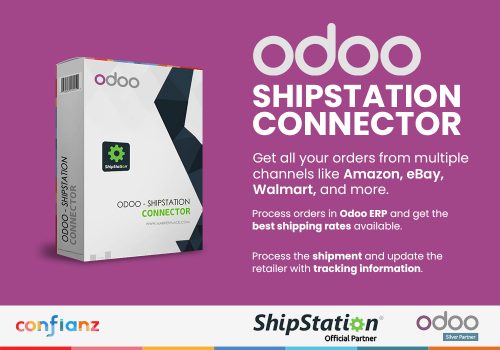 Confianz Global, Inc. North Carolina’s multi-award-winning ERP implementation company, announced that it has launched their Odoo-ShipStation Connector with advanced features. You can learn more about the


