High-Level Starbucks Delegation Visits Ethiopia Under the Radar

High-ranking executives from Starbucks, the world’s largest coffee chain, have made a discreet visit to Ethiopia, the continent’s leading coffee producer.

While Starbucks representatives have described this visit as a “low-profile business trip,” it seems anything but low-key to industry insiders, as it ushered in high-level global executives.

The high-profile delegation included executives from Starbucks’ trading division, Starbucks Coffee Trading Company, including Andres Berron, Managing Director and Vice President, Elliot Bentzen, Director of Trading & Traffic, Michelle Burns, Executive Vice President of Global Coffee & Sustainability, as well as other senior personnel from Starbucks’ roasting division.

Starbucks Coffee Trading Company oversees the coffee chain’s extensive green coffee supply chain globally, including transportation and quality.

Behailu Woldesenbet, the country manager for Starbucks’ Farmer Support Center in Ethiopia, described the trip as very low profile and refrained from commenting on its business objectives.

Starbucks typically conducts annual visits to its suppliers in Ethiopia; however, this marks the first instance in an extended period that a high-ranking executive has arrived and engaged in such understated trips.

Even the Ethiopian Coffee and Tea Authority was not aware of the visit. Adugna Debele (PhD), Director General of the Ethiopian Coffee and Tea Authority, told Shega that the Authority had not been officially informed of their trip or its purpose.

The three-day itinerary began with their arrival in Addis Ababa, where they stayed at the Sheraton Addis Hotel before their departure to Jimma . On Tuesday, the executives visited Limu Kosa Farm, part of MIDROC’s Horizon Plantations, followed by a trip to Daye Bensa Coffee in Sidama on Wednesday.

Both Daye Bensa and Horizon are certified producers that supply coffee to Starbucks through Neumann Kaffee Gruppe (NKG), one of the largest green coffee trading companies globally, headquartered in Hamburg.

Last month, MIDROC Investment Group, a business founded by the Ethio-Saudi business tycoon Mohammed Hussein Ali Al-Amoudi (Sheik), partnered with Neumann in a move aimed at enhancing Ethiopia’s coffee production. The agreement also includes plans for coffee processing and warehousing facilities in Addis Ababa.

Starbucks exclusively sources Arabica coffee beans, which constitute 100% of its coffee supply. As one of the world’s largest coffee buyers, the company procures around 3.3% of global coffee production annually, predominantly from Latin America.

However, Brazil, Starbucks’ largest supplier, has faced severe drought conditions that significantly impacted coffee production last year. This disruption has prompted the coffee chain to explore alternative sourcing options amidst rising customer concerns over supply stability and pricing.

The fluctuations in coffee bean prices directly affect Starbucks’ profit margins. On November 29, coffee prices surged to a 47-year high of $3.35 per pound due to major supply disruptions in key producing countries like Brazil and Vietnam.
Experts are meanwhile predicting yet another year of lackluster coffee output in 2025.

However, this global disruption might create a favorable condition for Ethiopia, which is grappling to meet the European Union’s Deforestation Regulation (EUDR), opening more market demand from non-European Union buyers like Starbucks.

According to Prime Minister Abiy Ahmed, Ethiopia’s annual coffee production has doubled from 500,000 tons to over one million tons in the past five years. In the last fiscal year, coffee exports reached an all-time record of $1.4 billion. This figure presents a 20% increase in volume and a 7.5% increase in value compared to the previous fiscal year.

Although the exact reasons behind the discreet visit have yet to be revealed, it has sparked discussions among Ethiopian coffee stakeholders. A coffee industry insider, who requested anonymity, has stated that many are speculating whether Starbucks is here to increase its sourcing or for other reasons.

Two decades ago, Ethiopia sought to trademark its famous coffee names Sidamo, Harar, and Yirgacheffe. The Ethiopian government estimated that securing these trademarks could generate an additional $88 million annually for its coffee sector.

However, Starbucks opposed these applications, arguing that such trademarks would limit their ability to market Ethiopian coffees globally. This opposition led to significant public outcry and protests against Starbucks, as many viewed the company’s actions as detrimental to Ethiopian farmers.

In December 2007, after extensive negotiations, Starbucks and the Ethiopian government reached a settlement. Starbucks agreed to recognize Ethiopia’s ownership of the three coffee names and to not obstruct future trademark applications for them.
The article was edited after initial publication to amend travel details.

source

High-Level Starbucks Delegation Visits Ethiopia Under the Radar Read More »

Emerging Trends: Europe’s next big tech opportunities

In 2021, the European tech ecosystem was in rude health – smashing the $100 billion VC funding mark for the first time. Two years later, however, that number had halved with the annual State of European Tech report placing annual funding for 2023 at $45 million.

The wider economic context can’t be ignored. 2023 again saw a difficult macro environment. It’s important, however, to not let a broad, region-wide perspective gloss over market-by-market performance and characteristics. The UK, for example, had a strong year, with HSBC finding that VC funding reached $22 billion, surpassing pre-pandemic levels, following an H2 2023 funding acceleration. 

While tech ecosystems in other European nations didn’t fare as well in comparison – we shouldn’t get carried away and extrapolate too much from total funding numbers. The UK boasts more scale-up tech companies in comparison to other European nations. That’s a good thing, of course, but we can also expect more talent to leave these now mature companies in search of a new early-stage adventure.

Indeed, when looking across the continent, the same State of European Tech report also found that Europe is still vastly outpacing the US when it comes to the number of tech founders hitting the market, despite the bar to entry now being far higher. This bodes well for the months ahead, where we’re seeing key trends and opportunities shaping Europe’s tech ecosystem for the better. So, let’s dig in deeper.

In years gone by, France was associated with bureaucracy – the kind of business climate that’s off-putting for entrepreneurs. It would be wrong to tar France with the same brush today. Smart government support for start-ups has resulted in resilient early-stage funding. The Bpifrance public investment bank has pumped tens of billions into French start-ups to serve as a resilient source of early-stage funding. This is a key reason why France saw less of a decline in VC funding in 2023 than other major European tech hubs.

Funding is just one piece of the puzzle though. France’s success can also be credited to the government’s broader measures to foster an environment for start-ups. This includes the Tibi programme, designed to shepherd more institutional money into late-stage funds, innovation tax credits, technology excellence centres financed  by public-private partnerships and innovation clusters to connect innovators within the same region.

In the coming months, expect to see stronger competition at the pre-seed and seed level for funding in France. Several recent raises have left regional funds with dry powder to deploy combined with higher-than-average super angel investor presence. The billionaire  Xavier Niel plans to invest 200 million euros into AI to push France to the forefront of the field, joining growing interest from large Family Offices, pan-European investors and French venture firms in supporting the thriving ecosystem.

In terms of the technology sweet spot for the French ecosystem, AI is the stand-out. Local players including Mistal AI, poolside and Raive are building foundational models in addition to activity in the AI tooling and application spaces. The presence of local Google and Meta AI research labs further strengthens the French case for being the leading European hub for AI. Fintech and climate tech are also fixtures of the French tech ecosystem. Mistral is particularly exciting and worth mentioning. Here’s an early-stage company that capitalised on its EU roots and managed to strike a partnership agreement with Microsoft despite Microsoft’s very public association with OpenAI. An achievement of this scale is pretty mind-blowing.

Overall, France has done a great job in its efforts to offer incentives for start-ups of the kind that have been hugely successful in the U.S. but haven’t been well replicated in Europe historically. That puts the local ecosystem on a great footing for the future.

Germany was the world’s worst-performing major economy in 2023. Yet, despite this backdrop, there’s reason to feel optimistic about the outlook for Germany’s tech sector this year. While France is making waves in AI, mega funding rounds for German AI players like Aleph Alpha, DeepL and Helsing in 2023 highlighted how the country boasts a serious ecosystem for frontier technology shaping AI’s future.
The German government has made clear its ambitions to invest more in homegrown and European VCs. Through its Future Fund and state-backed KfW Capital, the German state is investing and committing billions to start-ups and VC funds that align with its strategic vision. As a result of this targeted direction of funding, we expect to see Germany become one of the frontrunner ecosystems for renewable materials and more advanced areas of green technology in the years ahead.

The reality is, however, that any start-ups looking to benefit from large 2024 funding raises in Germany will have to demonstrate a commitment to the country’s domestic technology and public sector. This is down to the German state’s particularly active and influential sway role over regional VC funding. While there are positive signs of more institutional money in Germany being earmarked for growth capital, it still lags behind its contemporaries in funding per capita. Figures from the German start-up association, for example, reveal that while France invested a total of €107 per capita in start-ups in 2023, Germany only invested €85 per capita.

As German society hunkers down for a tricky economic period, the tech start-ups aligned to the public sector’s vision for Germany’s long-term tech leadership are set to benefit from raises.

Certain players in the tech ecosystems of France and Germany are undoubtedly making waves in the AI space today. But it would be remiss to overlook where this all started – the U.S.

OpenAI’s release of ChatGPT in November 2022 was a turning point. Quickly, enterprises and consumers came to see the transformative potential of generative AI and the technology has dominated the discourse since. According to PwC’s latest annual CEO survey, 32% of CEOs have already adopted generative AI across their company and 58% see generative AI as a catalyst for improving the quality of their products and services.

The rapid ascent of AI has had some obvious implications for the technology jobs market. The role of an AI engineer didn’t broadly exist two years ago. This meant a quick rush to convert knowledge workers from adjacent fields like Machine Learning into AI.
In the U.S., The ChatGPT shockwave resulted in a very significant outpacing of demand for AI talent compared to a relatively small talent pool. This has led to huge salary increases, with AI tech leads in the states today typically demanding salaries on or around the million-dollar mark.

It’s been a different story in the EU. The aforementioned ChatGPT shockwave was more distributed over time, so related tech worker salaries on the continent did not experience a massive jump and are more reasonable compared to the U.S. even today. Additionally, tech companies in the EU have a strong backbone of engineers from eastern EU countries to tap into. Such talent can be converted over time to serve the needs of AI start-ups. This is eased even further by the simple visa requirements that the EU boasts. For these reasons, the EU’s tech ecosystems are well-positioned to compete against U.S. tech in the new field of AI.

In conclusion, clear patterns underline why Europe is currently outpacing the US when it comes to new tech founders. In French and German efforts, we see the critical role that government support plays in supporting start-ups of all stages through macroeconomic downturns. And despite Germany’s historically smaller base level of venture capital, the Government’s commitment to climate and deep tech is successfully developing a leading ecosystem for these technologies regionally. Looking to the horizon, AI is set to dominate and be where growth opportunities for technology companies lie in the coming years. Thanks to strong tech ecosystems and uniquely favourable job market conditions, European start-ups can emerge from the dash as future AI winners.

source

Emerging Trends: Europe’s next big tech opportunities Read More »

Saudi Arabia’s deep tech startup ecosystem thrives with focus on AI and IoT, fueling Vision 2030

A recent report from the Ministry of Communications and Information Technology, King Abdullah University of Science and Technology, and consultancy firm Hello Tomorrow highlights the rapid growth of deep tech startups in Saudi Arabia, with 50% of these startups focusing on AI and IoT. These sectors are emerging as key drivers of innovation and investment in the Kingdom, with over 43 high-growth startups collectively raising more than 987 USD in funding.

Saudi Arabia has become one of the leading ecosystems for tech startups in the Middle East and North Africa , ranking among the top three for funding and deal activity. This success is a testament to the growing availability of venture capital, a dynamic entrepreneurial ecosystem, and government support for innovation-driven ventures. The deep tech sector, while still in its early stages, is drawing significant attention from international companies and investors, eager to tap into the country’s potential for technological advancement.

The surge in AI and IoT-focused startups is directly aligned with the objectives of Saudi Vision 2030, a strategic framework designed to diversify the Kingdom’s economy and reduce its reliance on oil revenues. Vision 2030 aims to foster a knowledge-based economy and establish Saudi Arabia as a global leader in technology and innovation. The deep tech sector plays a crucial role in achieving this vision, positioning AI and IoT at the forefront of the Kingdom’s digital transformation.

“Last year it was announced that KSA has the most productive economy in the world. the GDP is increasing more than any other country in the world, they have an ambitious plan to change. All of Saudi Arabia wants to be leaders across tech or any other area that is relevant in the world of science and technology. I think that if any company has an interest to be at the forefront of innovation, Saudi Arabia is a leader in that, with NEOM project, or KAUST University and different projects across the Kingdom. In order to make this a reality we need to rely on technology and technology is going to be the driver behind all of that so LEAP is the biggest tech event in Saudi and everybody needs to be here,” said to CIO Middle East Jason Roos, ex-CIO at KAUST.

As Saudi Arabia continues to invest in infrastructure, education, and research, the deep tech startup ecosystem is expected to grow even more robust in the coming years. This progress supports not only the economic diversification goals of Vision 2030 but also the development of a sustainable and innovative future for the Kingdom.
Andrea Benito is editor at CIO Middle East.

source

Saudi Arabia’s deep tech startup ecosystem thrives with focus on AI and IoT, fueling Vision 2030 Read More »

New Technology Revolutionizes Blockchain Beyond First-Gen Trailblazers

The landscape of the blockchain industry is undergoing a radical transformation. Once dominated by first-generation cryptocurrencies such as Litecoin (LTC), the focus has now moved towards more advanced platforms that are introducing breakthrough innovations.

These emerging platforms are not merely iterations of their predecessors. They represent a significant advancement in blockchain technology, offering new solutions to longstanding challenges. With enhanced capabilities, they promise greater efficiency and scalability, essential for widespread adoption across various sectors.

As the industry matures, the emphasis is on developing more versatile and robust blockchain applications. These applications are designed to cater to a broader range of use cases, moving beyond simple transactions to include smart contracts, decentralized finance (DeFi), and non-fungible tokens (NFTs), among others. This shift highlights a growing need for technology that is not only secure and decentralized but also adaptable to the ever-changing demands of digital economies.

The competition among blockchain platforms is stiff, with each vying to establish itself as the go-to solution for future technological challenges. This has led to an arms race of sorts, with developers racing to deliver platforms that are not just innovative but also user-friendly and capable of handling complex applications seamlessly.

In summary, as blockchain technology evolves, the attention has definitively shifted from pioneering currencies to cutting-edge platforms that promise greater flexibility, security, and scalability, shaping the future of decentralized innovation.

As the blockchain industry continues to evolve, investors face the task of navigating both opportunities and challenges within the cryptocurrency market. With the focus shifting from pioneering cryptocurrencies like Litecoin (LTC) to more advanced platforms, it’s time to explore the predictions for cryptocurrency rates in 2025, understand investment risks, and weigh the pros and cons of diving into this dynamic landscape.

Investor Advice: Navigating the New Blockchain Era
In the rapidly changing world of cryptocurrencies, investors should consider their goals and risk tolerance before diving into this volatile market. Researching and understanding the technology behind blockchain platforms is crucial for making informed investment decisions. Diversification remains a key strategy—spreading investments across various assets can mitigate risks and maximize potential returns.

Cryptocurrency Rate Predictions for 2025
Predicting cryptocurrency rates involves analyzing market trends, technological advancements, and macroeconomic factors. While specific predictions can vary, some experts suggest that the value of popular cryptocurrencies like Bitcoin and Ethereum may continue to rise as blockchain adoption grows. The increasing use of decentralized finance (DeFi) platforms and integration of blockchain technology in various sectors could drive demand and influence rates positively.

Understanding Investment Risks
Investing in cryptocurrencies carries inherent risks, including volatility, regulatory uncertainties, and potential technological failures. Prices can fluctuate dramatically, and while high returns are possible, losses can be equally significant. Staying informed about regulatory developments and being cautious of projects with unclear goals or management teams can help mitigate these risks.

Pros and Cons of Cryptocurrency Investments

Pros:
Potential for High Returns: The volatile nature of cryptocurrencies offers the potential for significant gains.
Innovative Technology: Investing in blockchain means participating in cutting-edge technology with transformative potential in various industries.
Decentralization: Cryptocurrencies offer an alternative to traditional financial systems, emphasizing security and autonomy.

Cons:
High Volatility: Cryptocurrency values can fluctuate widely over short periods.
Regulatory Risks: Changes in regulations can impact market dynamics and liquidity.
Security Concerns: Despite advancements, issues like hacking and fraud remain prevalent risks.

Controversies Surrounding Cryptocurrencies
The decentralization and anonymity of cryptocurrencies have led to controversies relating to illegal activities, environmental concerns due to mining energy consumption, and disruptive impacts on traditional finance. Each of these issues continues to spark debate among policymakers and industry leaders about the future role of cryptocurrencies in the global economy.

As the world embraces blockchain technology, investors have a remarkable opportunity to be part of a transformative sector. However, thorough research and strategic planning are essential to navigate this complex and fast-paced industry effectively.

source

New Technology Revolutionizes Blockchain Beyond First-Gen Trailblazers Read More »

Developer Velocity: How software excellence fuels business performance – McKinsey

With technology powering everything from how a business runs to the products and services it sells, companies in industries ranging from retail to manufacturing to banking are having to develop a range of new skill sets and capabilities. In addition to mastering the nuances of their industry, they need to excel first and foremost at developing software.

It’s a big leap for many, yet a large number of businesses are working hard to make it. At the Goldman Sachs Group, for instance, computer engineers make up about one-quarter of the total workforce.1 Within retail, software development is the fastest-growing job category.2 Indeed, of the 20 million software engineers worldwide, more than half are estimated to be working outside the technology industry, and that percentage is growing.

However, for the vast majority of businesses, these investments have not led to meaningful performance improvements. Launching a new product or feature can still take months. Leaders still struggle to scale promising sandbox innovations. We often hear CEOs, chief technology officers, and chief information officers lament that their software-development spending is a “black box.”

Improving business performance through software development comes down to empowering developers, creating the right environment for them to innovate, and removing points of friction. Industry leaders refer to this capability as “Developer Velocity.” This goes beyond the definition of velocity as it relates to agile methodologies—meaning it is about not just speed but also unleashing the full potential of development talent.

The Developer Velocity Index (DVI) takes into account 46 different drivers across 13 capability areas (exhibit). To develop and validate this list of drivers, we conducted interviews with more than 100 chief technology officers, chief information officers, and other senior engineering leaders. We then asked technology executives at 440 large organizations across 12 industries in nine countries to rate their company’s performance. DVI scores are calculated as a weighted average of scores across the drivers, with equal weight given to the three broad categories—technology, working practices, and organizational enablement.

Our analysis examined the impact of DVI scores on revenue, total shareholder returns, and operating margin. We also looked at four nonfinancial business-performance indicators: innovation, customer satisfaction, brand perception, and talent management. Finally, we ran statistical correlations of business performance against the various dimensions of Developer Velocity. We used the Johnson’s Relative Weights analysis to quantify the relative importance of the correlated drivers of DVI scores.

To gain a more precise understanding of the factors that allow organizations to achieve Developer Velocity, we conducted an in-depth survey of senior executives at 440 large enterprises, more than 100 expert interviews, and extensive external research (see sidebar, “About the research”). As a result, we created what we call the Developer Velocity Index (DVI), which pinpoints the most critical factors (related to technology, working practices, and organizational enablement) in achieving Developer Velocity, as well as those that are not nearly as important as many executives and observers might believe.

Our research reveals that top-quartile DVI scores correlate with 2014–18 revenue growth that is four to five times faster than bottom-quartile DVI scores (Exhibit 1). Top-quartile companies also have 60 percent higher total shareholder returns and 20 percent higher operating margins. In addition, top-quartile players appear to be more innovative, scoring 55 percent higher on innovation than bottom-quartile companies. These businesses also score higher on customer satisfaction, brand perception, and talent management (Exhibit 2).
Similar patterns hold within specific industries and sectors. For example, top-quartile software companies saw revenue grow almost two times faster than other software companies in the same period. In financial services and retail, top-quartile companies saw positive revenue growth while average revenue declined in the other quartiles.

While the link between Developer Velocity and business performance cuts across all industries, not surprisingly, sectors that are more digitally mature—including software (naturally), discrete manufacturing, and financial services—have higher DVI scores overall (Exhibit 3).
To take it a step further, we analyzed 13 capabilities (composed of 46 individual performance drivers) to better understand the specific conditions that create high Developer Velocity. We found the four with the greatest impact on business performance are tools, culture, product management, and talent management (Exhibit 4). These four areas are also strongly correlated with each other—that is, top performers with high scores in one capability tend to also have high scores in the other three.

The companies that have mastered Developer Velocity focus equally on empowering the developer, anticipating critical enablers, aligning investments with customer value, and minimizing barriers to productivity.

Interestingly, these findings fly in the face of conventional industry wisdom. For example, many of the business leaders we interviewed assumed agile ceremonies at a team level would be among the top enablers of software development. But while agile team practices are helpful (especially in lifting performance among third- and fourth-quartile players), our study finds they do not play an outsized role in advancing DVI scores beyond that.

The other outlier was developer tools. Our research shows that best-in-class tools are the top contributor to business success—enabling greater productivity, visibility, and coordination. Yet only 5 percent of executives recognized this link and ranked tools among their top-three software enablers. The underinvestment in tools across the development life cycle is one reason so many companies struggle with “black box” issues.

Why the disconnect between what leaders think drives software success and what actually does? One answer is that relatively few leaders understand the day-to-day developer experience. Another challenge is prioritizing investment among the large and diverse set of levers. Several actions can help address the four biggest factors in Developer Velocity: tools, culture, product management, and talent management.

According to our research, best-in-class tools are the primary driver of Developer Velocity. Organizations with strong tools—for planning, development (for example, integrated development environments), collaboration, and continuous integration and delivery—are 65 percent more innovative than bottom-quartile companies. The ability to access relevant tools for each stage of the software life cycle contributes to developer satisfaction and retention rates that are 47 percent higher for top-quartile companies compared with bottom-quartile performers.

Top-quartile companies give developers a degree of choice—usually between two and five options to account for different needs and preferences—but restrict ad hoc tools from being added. Leading companies also use tools to unleash Developer Velocity by investing in low-code and no-code platforms. These platforms enable the average business user to develop applications without any software experience, freeing up seasoned developers to focus on the most challenging tasks. For example, one pharmaceutical company grew its low-code platform base from eight users to 1,400 in just one year. Business users outside of IT are now building applications with thousands of monthly sessions. The companies in our survey that empower “citizen developers” in these sorts of ways score 33 percent higher on innovation compared with bottom-quartile companies.

Organizations that enable software teams to experiment, fail, and learn in a safe environment see consistently better results. Knowledge sharing, continuous improvement, a servant-leadership mindset (that is, managers viewing their role as empowering their teams to be successful rather than simply overseeing them), and a customer-centric philosophy are all correlated with superior business performance. But far and away the most important cultural attribute is psychological safety—a shared belief that risk-taking in the pursuit of innovative problem-solving is permitted and protected.

Although most executives recognize the importance of psychological safety, only 20 percent believe their organization has succeeded in creating this culture. The chief information officer of a leading multinational bank told us that learning how to fail was the most difficult part of the company’s transition to mobile banking.

Companies that perform best at this aspect of cultural change also invest in systems that can absorb and minimize the cost of failures. These investments include capabilities such as controlled releases, feature flags (the ability to turn features on and off without redeploying code), and automated rollbacks, as well as postmortems and retrospectives that allow teams to reflect constructively on what worked and what did not. A software leader at one top-quartile company said, “You need to implement safeguards in order to embrace failure, so we build contingencies as part of the software-development process. For example, we install a new version side by side with the stable version.”

In addition to promoting psychological safety, companies with high DVI scores more frequently recognize employees for their achievements, publicly acknowledging individual and team efforts and rewarding outstanding contributions. They also build strong communities of practice through, for example, regular, brown-bag meetups on specific topics. And they create processes that allow teams to engage more directly with the customer—for instance, through demos and site visits.

Organizations that enable software teams to experiment, fail, and learn in a safe environment see consistently better results.
Product management means more than simply ensuring on-time and on-budget releases. It is about ensuring that the right products are built in the right ways to deliver a compelling customer experience.3What matters in customer-experience transformations,” July 2019. The importance of delivering this kind of experience is why the product-management function has become so critical over the past decade and why these capabilities rank as the third-leading driver of Developer Velocity.

Our research examined six dimensions of product management—customer experience, strategic skills, business acumen, technical skills, leadership skills, and organizational enablers (such as mechanisms that assist with strategic prioritization, funding, and the adoption of product telemetry). The results show that DVI scores are less sensitive to individual attributes and far more responsive to an integrated, balanced product-management function. The product-management team not only needs relevant business and market knowledge but also a strong technical background. Companies with above-average performance across the six dimensions have DVI scores 1.5 times higher than companies with top-quartile performance in just one or two dimensions. It is important to note that excellent product management is also not about the discrete product-management team; developers and other members of an agile team are increasingly wearing the product-manager hat to understand how their work is aligned with business priorities and customer needs.

The world of technology has long been fixated on the idea of rock-star developers: individuals capable of producing at ten times the rate of the average developer. While debate exists over the size of the exponential, there is little question that the most talented developers are engines of velocity in their own right. With developers and related roles in high demand, the challenge is how to attract and retain such talent and create the conditions that ensure their continued success. Our study found that the talent factors most correlated with high rates of Developer Velocity—in addition to the impact of tools on talent outcomes as discussed earlier—are incentives, multifaceted recruiting programs, a rich program of ongoing learning, well-defined engineering career paths, and an active measurement of team health.

Leading companies are resourceful when it comes to keeping software talent happy and motivated. One leading telecom company offers a wide range of skills certifications or “microbadges,” from beginner’s-level mobile development to machine learning. It also created a Developer University to provide developers with fresh learning opportunities and the chance to apply these skills in their workplace.
Best-in-class companies also recognize the role that team health plays in boosting productivity and retention. They take the pulse of their developer teams on a regular basis—for example, after every one or two sprints. Surveys, whiteboard notes, and visual dashboards provide instant feedback that teams can use to address issues and refine processes quickly. Comprehensive annual or biannual employee surveys augment the more frequent check-ins, going deeper into topics such as shared vision, leadership, motivation, and incentives.

While the four core drivers apply across the entire group of companies surveyed, a different driver emerged as the biggest differentiator for companies within the top quartile: open-source adoption. For organizations that already have a strong DVI score, open-source adoption acts as a major accelerator. The data show that top-quartile company adoption of open source has three times the impact on innovation as compared with companies in other quartiles. Top-quartile DVI companies are especially active adopters, scoring 36 percent higher on open-source adoption than the next quartile—the highest delta on any dimension studied. We found that building an open-source culture is about more than using open-source software within the code; it extends to encouraging contribution and participation in the open-source community as well as adopting a similar approach to how code is shared internally—that is, strong InnerSource adoption.

Another notable distinction is that DVI leaders are more advanced in managing open-source development securely. Many are using centralized security management and automated tools that can scan open-source components and remediate vulnerabilities before deployment. Compared with these leading adopters, less than 20 percent of companies are employing these advanced security measures.
Public-cloud adoption as a catalyst of Developer Velocity is especially strong for nonsoftware companies—public-cloud adoption has four times the impact on their business performance than it does for software companies. Developer Velocity benefits are also sharply correlated with the degree of adoption: companies in the top quartile of public-cloud adoption have DVI scores that are 32 percent higher than companies in the bottom quartile. By comparison, a partial shift returns significantly less benefit: companies in the third quartile gain only a 2 percent DVI score advantage over the lowest adopters.

The analysis also identified emerging drivers with the potential to accelerate DVI scores over the next three to five years. Top-quartile companies are increasingly exploring the use of artificial intelligence (AI) and machine learning in developer tools. For example, some have begun using AI to perform aspects of pair programming (in which typically one developer writes code while another almost simultaneously reviews it), providing automated code reviews and using natural language processing in low-code tools. Additional areas that executives believe will accelerate software innovation and impact in the future include increased usage of product telemetry to make product decisions and automation in detecting and remediating production issues.

Improving Developer Velocity is a journey, not a race. The businesses that are achieving the greatest returns from their software investment are those willing to tackle the entrenched cultural and structural barriers that are often the hardest and most nebulous to address. Companies that excel in providing the right tools, culture, product management, and talent management not only develop software faster but also deliver significantly stronger business outcomes.

source

Developer Velocity: How software excellence fuels business performance – McKinsey Read More »

Total Valuation of Ethiopian Startups Passes $300M

A new insight report on Ethiopia’s startup landscape reveals the concentration of funding in a few standout firms while the ecosystem combined has a total enterprise valuation of $302 million.

The Report prepared by GrowthAfrica and Systemic Innovation under an FCDO-supported Research and Innovation Systems for Africa (RISA) Fund project relays interesting figures into Ethiopia’s entrepreneurial ecosystem.

After assessing data compiled from 562 companies, of which 489 are startups, through Dealroom, the Report indicates that no firms crossed the $200 million valuation until 2024. Companies founded between 2015 and 2020 are key drivers of value, starting with a modest $6 million value in 2016, growing to $157 million by 2019, and peaking at $182 million in 2022.

The report, dubbed The State of Startup Innovation in Ethiopia, also explores investment trends, employment contributions, enterprise valuations, and sector-specific activity. However, it includes businesses that may not fully meet the definition of a startup.

Scott Walker, CEO of Systemic Innovation, explained in an email to Shega that the report aims to present a holistic view of the entrepreneurial ecosystem. According to Walker, startups defined as firms less than 10 years old were the primary focus, as requested by the government.

“Our approach also considers the broader ecosystem by utilizing Total Enterprise Value (TEV), a globally recognized standard, to ensure consistency across businesses of varying sizes and stages,” he stated.

In addition, Dealroom collects data from public sources such as news, and company filings. Consequently, the analysis might not comprehensively reflect the total funds raised, as many startups in Ethiopia do not disclose funding details.

Scott explained that the dataset in the Report primarily focuses on formal enterprises within Ethiopia’s innovation ecosystem, including startups, scaleups, and high-growth firms that meet Dealroom’s database criteria. The data used in the Report is also free to access via the Ethiopian Startup Data Hub.

While Ethiopian startups remain underfunded compared to their counterparts in neighboring African countries, a marked improvement has been visible over the past decade. According to the insight report, the highest amount of funding ever raised by a single firm was 42 million dollars in 2024, while the average is around 250k.

Roha Medical Campus, which received venture capital equity funding back in February, is the only firm listed in Dealroom with the stated amount. A sector analysis also reveals that fast-moving consumer goods (FMCG) firms attracted around 26 million dollars in funding while training, workforce development, and education, wooed in 4.15 million dollars.

Komari Beverages, raised over $26 million dollars in 2019.  M-Birr, the first mobile money service in the country, managed to pull in nearly 8 million dollars from the European Investment Bank in 2018, while EthioChicken attracted close to 3 million dollars a year before.

Nonetheless, investment in Ethiopia’s ecosystem remains limited, with most remaining modest compared to more mature markets.
Another major progress highlighted by the Report was the advances in terms of job creation. After nearly a decade marked by less than 20,000 employees, Ethiopia’s startup labor market now accommodates around 30,000 jobs.

Innovation also appears to lag in Ethiopian companies, with just two of the reviewed companies holding patents. This is an insight affirmed by the latest Global Innovation Index report that ranks Ethiopia in the bottom three of 133 countries in terms of innovation performance.

Ethiopia’s startup ecosystem has struggled for several years in terms of accessing credit, obtaining permits, and even renting out office space. With the Startup Act still in the draft stage, no formal substructure or regulatory system is in place.

Amitty Weiss, Managing Partner at Melela Partners, expects the Report and associated database to provide deep insight into the progress of Ethiopia’s start-up ecosystem over the last decade.

“It’s exciting to see the growth that has occurred and to have clarity on where the ecosystem needs to focus,” she told Shega.
Amity believes that the databases raise Ethiopia to the level of regional peers by providing investors, startups, and ecosystem players with a tool to research individual startups.

Nonetheless, Ethiopia’s investment climate remains challenging, as highlighted by the recent review by the International Trade Administration of the United States. Logistical bottlenecks, corruption, high land-transportation costs, and bureaucratic delays were indicated as daunting. Ethiopia not being a signatory of major intellectual property rights treaties such as the Paris Convention for the Protection of Industrial Property also dissuades investors.

source

Total Valuation of Ethiopian Startups Passes $300M Read More »

Israel Reaffirms Commitment to Ethiopia, Emphasizing Agricultural Technology

Addis Ababa January 10/2025 (ENA)—Israel has reaffirmed its commitment to bolstering cooperation with Ethiopia, focusing on supporting the country’s agricultural sector through technological advancements.

Ambassador of Israel to Ethiopia, Abraham Niguse said that Ethiopia and Israel enjoy a strong historical relationship, particularly in the realms of economic and people-to-people ties.

He highlighted that both nations are actively working to strengthen their relationship through enhanced economic and developmental cooperation.

The ambassador emphasized Israel’s keen interest in collaborating with Ethiopia to boost agricultural productivity.
He also pointed out Israel’s expertise in advanced agricultural technologies, such as drip irrigation, which has successfully transformed arid landscapes into fertile land.

Recognizing Ethiopia’s fertile soil, he noted the significant potential for applying these innovative techniques to increase agricultural output.

The ambassador also confirmed that Ethiopia is making strides in improving its irrigation systems through both new and ongoing agricultural projects, contributing to more efficient irrigation development.

A couple of month ago, an Israeli delegation focused on innovation, health, and mining visited Ethiopia to explore collaboration opportunities.

During their visit, Israeli investors expressed strong interest in sectors like agricultural technology, innovation, and mining.
The ambassador further noted that the Ethiopian government is actively working to create a favorable environment for investors, encouraging them to invest and operate in the country.

Additionally, Israeli investors have shown particular interest in expanding their investments in avocado production. Since Israel widely imports Ethiopian coffee, sesame, and teff, increasing agricultural productivity is seen as a mutually beneficial opportunity.

Furthermore, Ethiopia is harnessing its renewable energy potential from solar, wind, and geothermal sources to support irrigation development, integrating modern technology and knowledge transfer from higher education institutions.
Israel and Ethiopia also share a long history of cooperation in the field of medicine.
source

Israel Reaffirms Commitment to Ethiopia, Emphasizing Agricultural Technology Read More »

Ethiopia’s Startups to Receive $750,000 in Grants at Landmark GRV Summit

Promising early- and growth-stage startups in the agriculture, healthcare, and education sectors are set to receive $750,000 in equity-free grants from the Ethiopian Diaspora Trust Fund (EDTF) at an upcoming summit.

The Great Rift Valley Innovation Summit (GRV), scheduled for late January, will mark one of the largest fundraising and pitch competition events in the history of Ethiopia’s nascent startup ecosystem.

According to Afomia Hailemeskel, co-executive producer of GRV Summit, the initiative looks to respond to the pressing need for innovative solutions that can address the challenges faced by Ethiopia’s youth.

“The decision to organize this specific startup funding event stems from the growing need to empower Ethiopia’s youth to become innovative leaders in sectors that are pillars of the nation: agriculture, education, and healthcare,” Afomia told Shega.

The fund, raised through contributions from Ethiopian diaspora communities worldwide, totals nearly $1 million and will be awarded in two categories. Currently accepting applications, EDTF plans to support over a dozen startups.

In the first category, which is dubbed the Legacy Builder Award, a total of $650,000 will be awarded to support four entrepreneurs with strong, scalable business models that align with EDTF’s impact areas. The grand prize for this category is $150,000, with an additional $50,000 People’s Choice Award.

The second category is the Young Innovator Award, where a total of $100,000 will be distributed to ten young innovators or first-time founders aged 25 and under. Each recipient will receive $10,000 to develop their innovative ideas and create impactful solutions.
EDTF has also partnered with the Innovative Finance Lab to assist in pitch vetting and judging. This collaboration, according to Afomia, underscores the importance of expertise in selecting startups that not only show potential for growth but also align with EDTF’s mission of driving impactful change.

All participants in the Pitch Competition will be guaranteed a slot in Cohort 4 of UNDP/IFL’s leadership accelerator and capital readiness program. The 5-month-long incubation program will provide ongoing mentorship, upskilling, and development in an accelerator environment.

A 2023 startup ecosystem report by Shega, JICA, and the Ministry of Innovation & Technology highlights the persistent funding challenges faced by Ethiopian startups. Early-stage ventures struggle to secure funding due to a lack of market validation, while traditional lenders are hesitant to provide loans. The report also notes the limited availability of alternative financing options like venture capital and crowdfunding.

Following Prime Minister Abiy Ahmed’s plea to the diaspora community to contribute a dollar a day toward vital socio-economic projects in 2018, the Ethiopian Diaspora Trust Fund was established to mobilize global support for sustainable development in Ethiopia. The fund has previously supported critical initiatives such as COVID-19 relief efforts, childhood education, and projects addressing hygiene, sanitation, and water supply.

source

Ethiopia’s Startups to Receive $750,000 in Grants at Landmark GRV Summit Read More »

20 Growing Manufacturing Companies & Startups (2024)

In the United States alone, the market size of the manufacturing industry is worth $3.17 trillion. It’s projected to grow at a CAGR of 3.16% until 2028.

The rise of software and robotics has made a deep, lasting impact on the manufacturing industry as a whole.
Since manufacturing has so many different processes and complex stages of production, there is an insatiable demand for software and robotics to enhance automation and improve workflows.

Read on for our list of 20 manufacturing startups that are working on everything from cutting-edge analytics to state-of-the-art robotic assistants.


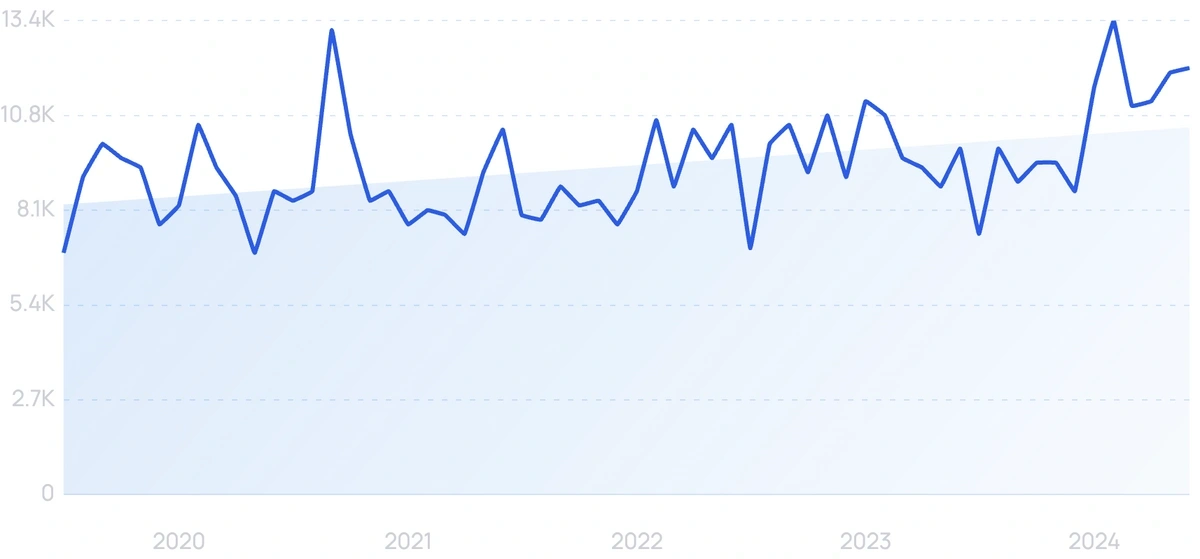
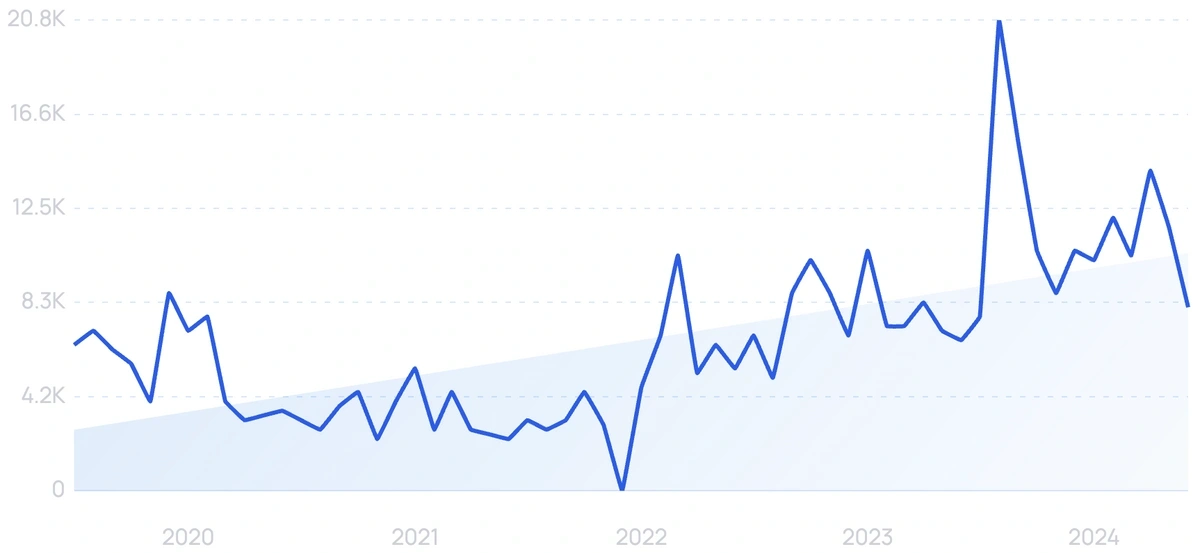
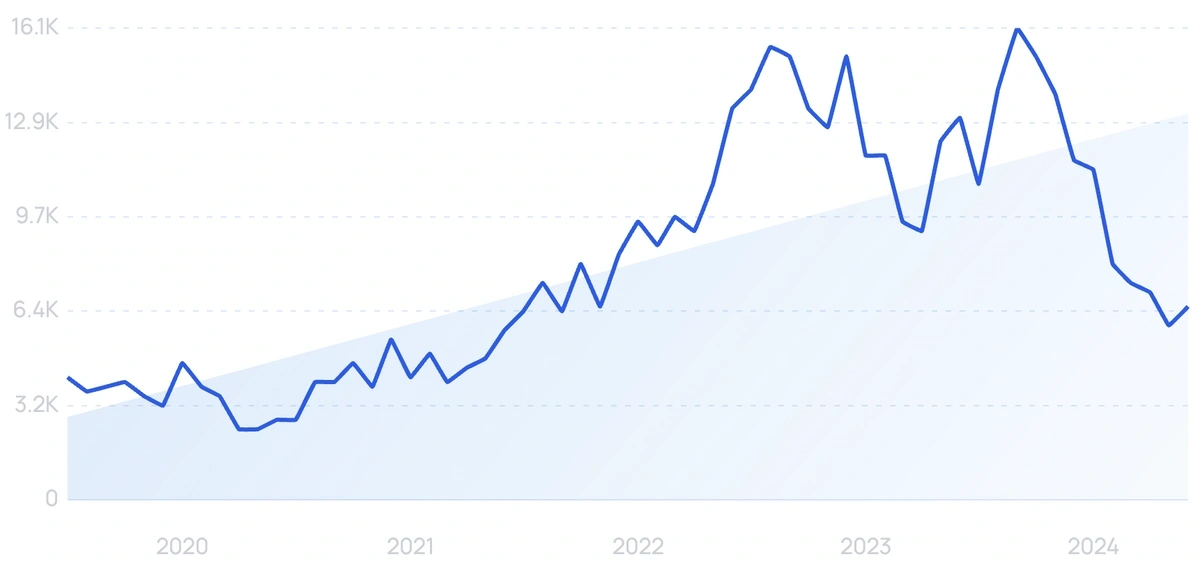
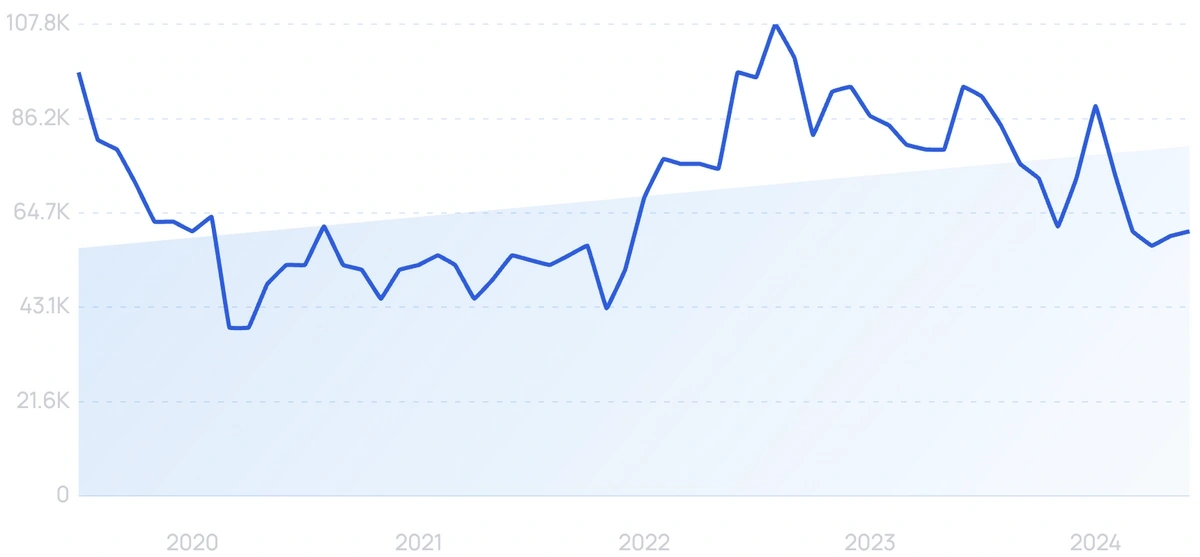
5-year search growth: 76%
Search growth status: Exploding
Year founded: 2016
Location: Lysaker, Norway
Funding: $338.2M (Secondary Market)
What they do: Used by heavy hitters like BP and Aramco, Cognite’s bread and butter product is an industrial data operations platform called Cognite Data Fusion (CDF). CDF allows the manufacturing and industrial customers to have a single home for data visualization while providing scale for AI and ML applications that can easily integrate with CDF.
For AkerBP, a major oil player from Norway, Cognite is saving the firm around $6M annually on top of reducing their environmental impact.
undefined
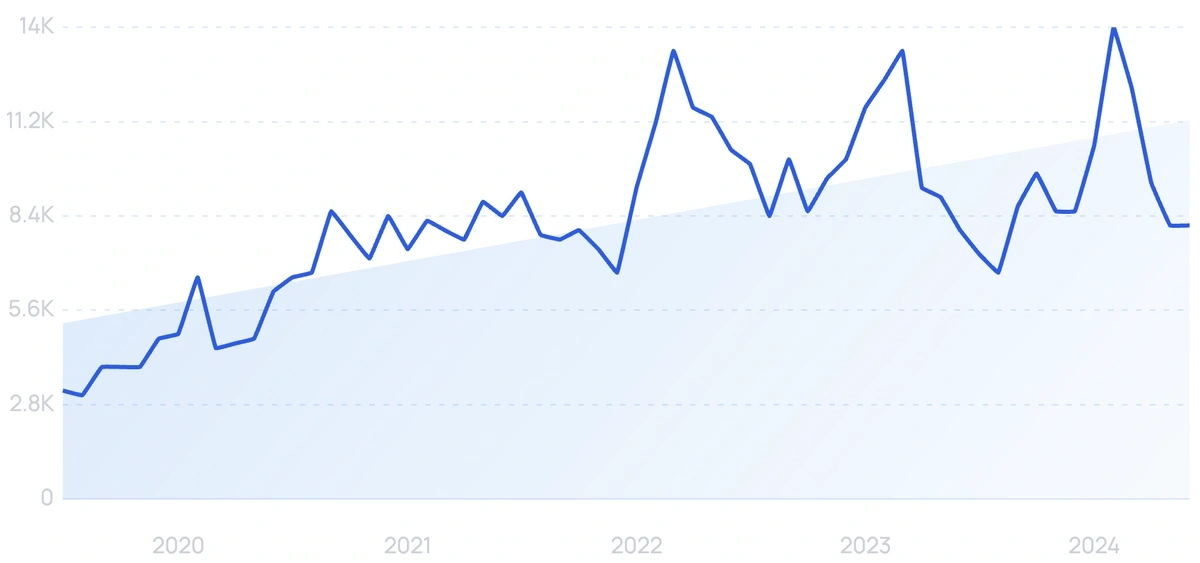
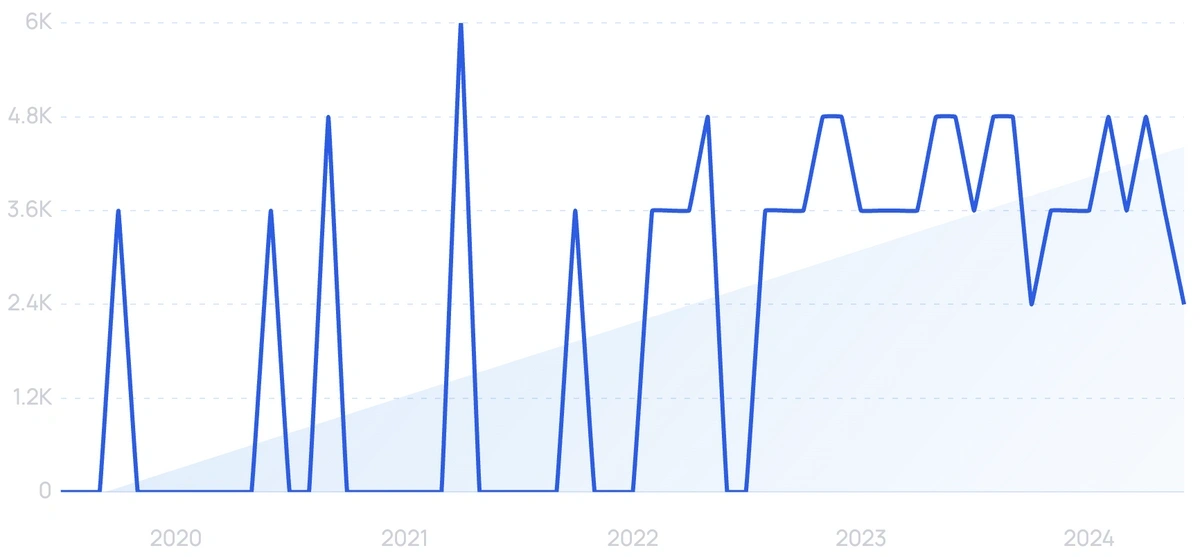
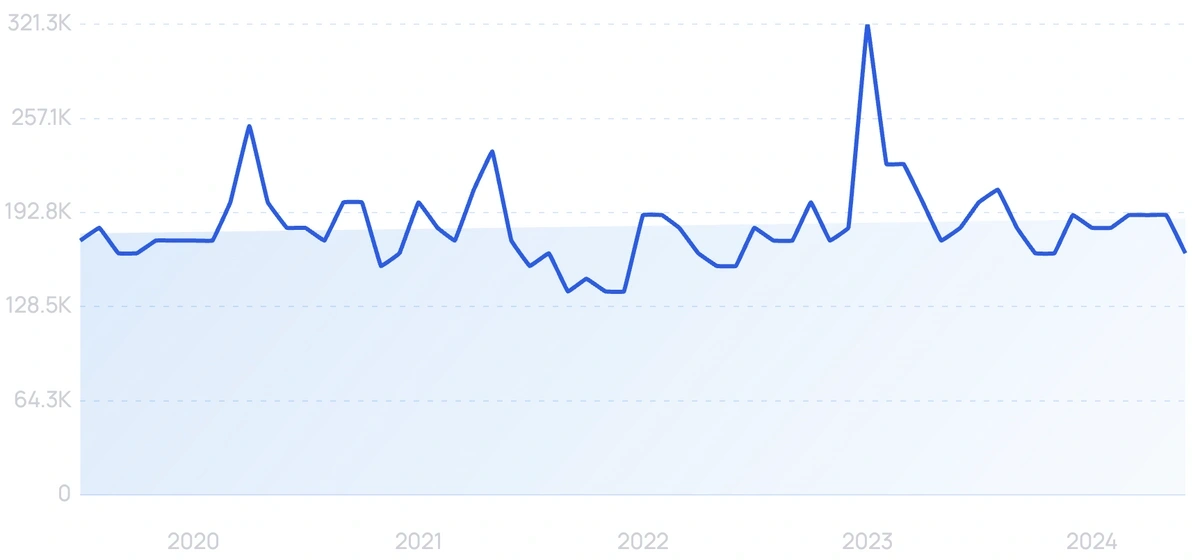
5-year search growth: 152%
Search growth status: Regular
Year founded: 2021
Location: Natick, Massachusetts
Funding: $798.3M (Debt Financing)
What they do: Electric Hydrogen is a startup that aims to reduce the carbon footprint of heavy-duty transportation by providing a hybrid hydrogen-electric solution. Their platform combines a hydrogen fuel cell system with electric batteries to provide a range of up to 600 miles, making it an attractive option for long-haul trucking. Their technology also allows for easy refueling and eliminates the need for costly and time-consuming battery recharging.
undefined
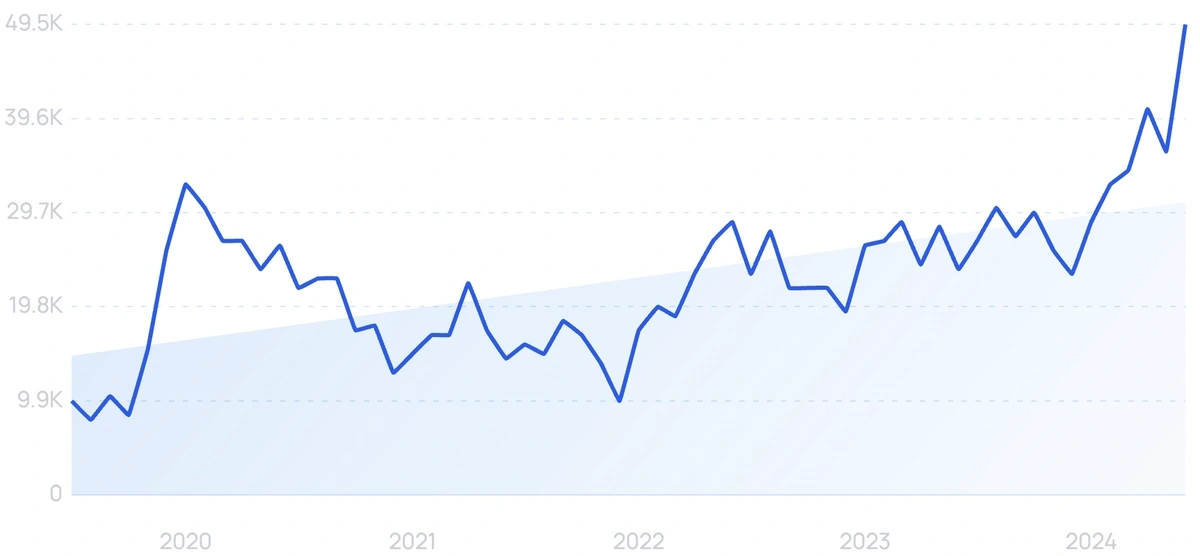
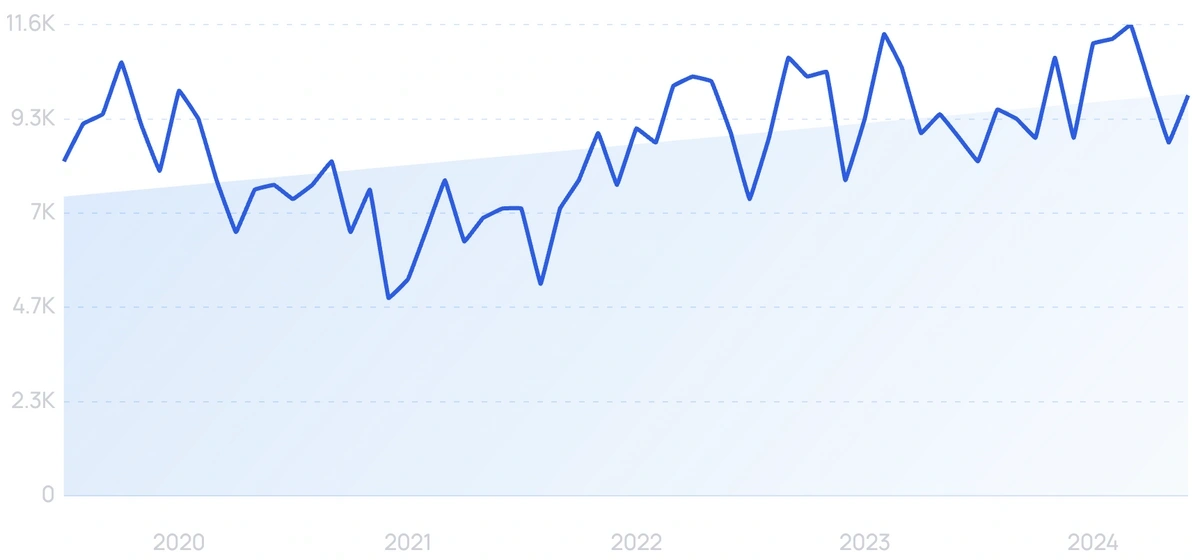
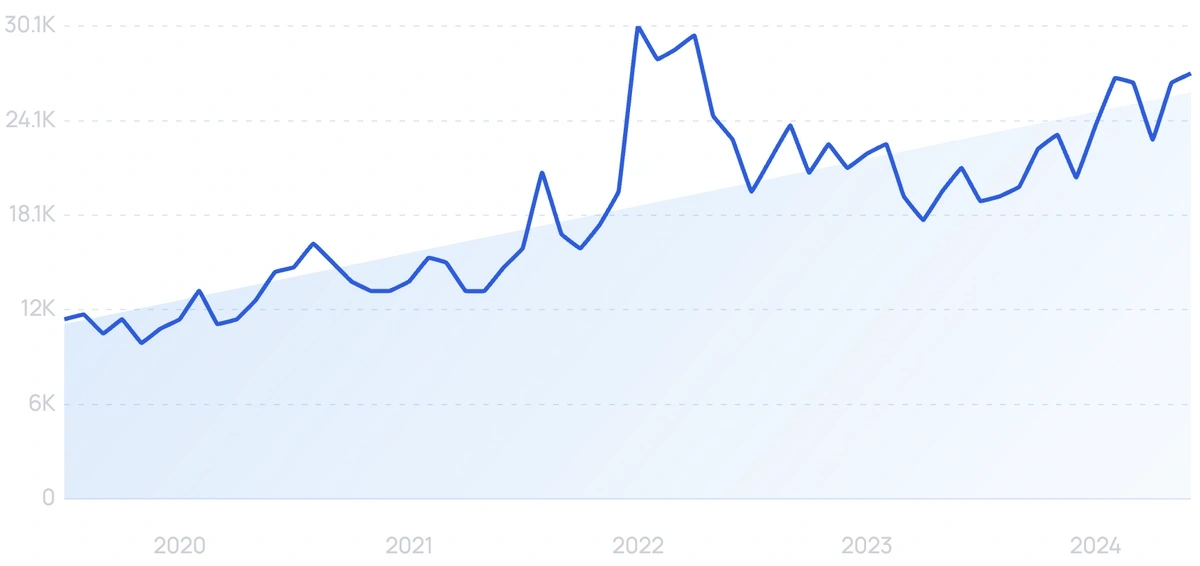
5-year search growth: 400%
Search growth status: Exploding
Year founded: 2014
Location: Columbia, Missouri
Funding: $3.5B (Debt Financing)
What they do: EquipmentShare noticed common problems that contractors had with the availability of flexible on-site machinery and equipment and invented a solution. Operating over 80 full-service facilities in 29 states, contractors can simply pick what’s needed on a certain project and then manage their rentals with EquipmentShare’s Track technology.
Their tracking technology allows managers to monitor equipment, get real-time alerts on status and location, and check on the health of the equipment over the life of the project. EquipmentShare was recognized by CIO Applications as a top 2021 Construction Tech firm.

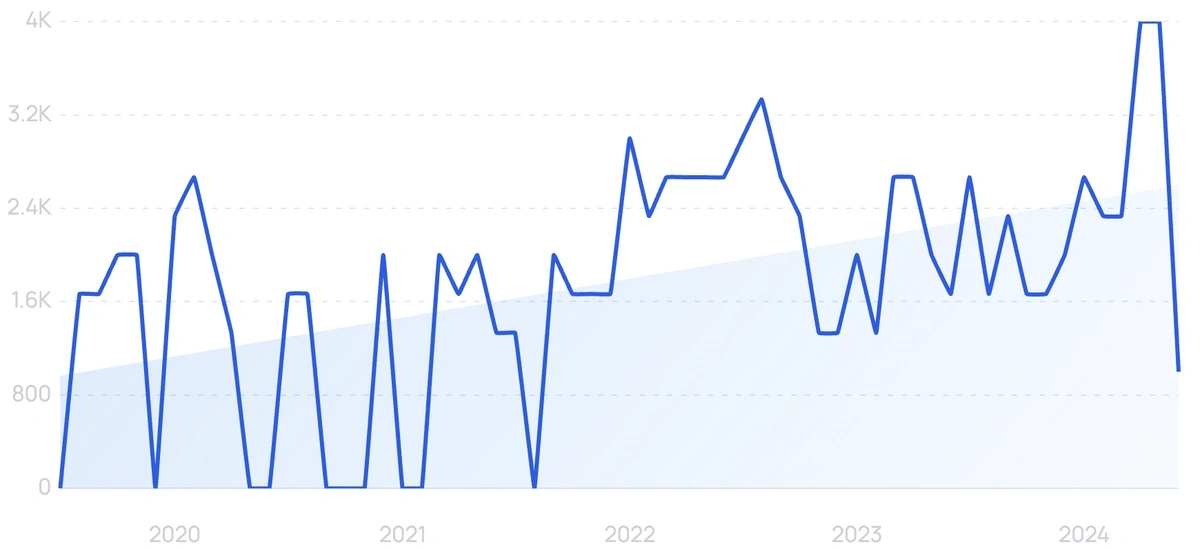
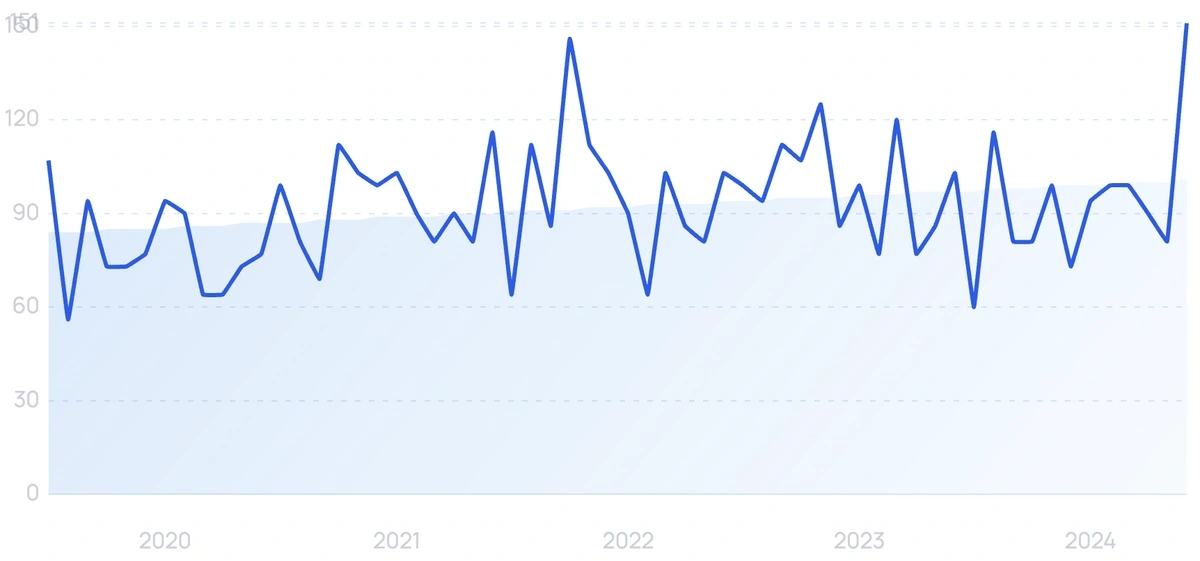
5-year search growth: 26%
Search growth status: Regular
Year founded: 2013
Location: Pittsburgh, Pennsylvania
Funding: $222M (Series C)
What they do: Infrastructure inspections for manufacturing or construction are often dangerous and fraught with risks for humans, not to mention costly scaffolding costs or special equipment needed for hard-to-reach places. Gecko Robotics’ innovative line of robots lined with sensors crawl into hard-to-reach spaces and perform inspections on boilers, piping, machinery, and more. Damage to critical machinery in hazardous industries like chemical and even pulp paper production can set teams and deadlines back for weeks at a time. Gecko safely goes where humans shouldn’t while collecting critical infrastructure data necessary for repairs.

5-year search growth: 100%
Search growth status: Peaked
Year founded: 2014
Location: Somerville, Massachusetts
Funding: $152.5M (Series C)
What they do: Tulip Interfaces connects systems, devices, machines, and people involved in the manufacturing process together in one streamlined platform. Manufacturing is often complicated and involves countless steps, protocols, and software in the endless pursuit of efficiency. Teams that Tulip Interfaces helps include operations, IT, engineering, and quality assurance. Tulip Interfaces keeps its clients under wraps, but their platform has been deployed by “dozens of global companies” in industries ranging from Aerospace to Pharmaceuticals.

5-year search growth: 20%
Search growth status: Regular
Year founded: 2013
Location: Bedford, Massachusetts
Funding: $86M (Series C)
What they do: Soft Robotics was well-positioned to take advantage of labor shortages in the food industry as a result of Covid-19. Their proprietary pneumatic powered gripper was designed for the delicate task of picking food and packaging, which typically requires a human being. Soft Robotics holds over 40 patents and applications around their custom machinery. The US fresh produce packing market size is around $27B today, and Soft Robotics is aiming to become the market leader in a niche that’s ripe for disruption.

5-year search growth: 200%
Search growth status: Regular
Year founded: 2018
Location: Philadelphia, Pennsylvania
Funding: $38M (Series B)
What they do: FORT Robotics is a safety and security technology company that focuses on developing systems for autonomous machines such as drones, forklifts, and robots. The company’s products aim to ensure safe and secure use of these machines in industrial environments. FORT Robotics offers solutions such as software, sensors, and hardware to enable remote monitoring and control of machines to mitigate risks and prevent accidents.

5-year search growth: 2%
Search growth status: Regular
Year founded: 2016
Location: Columbus, Ohio
Funding: $41.5M (Corporate Round)
What they do: Ready Robotics is all about ease of use through their plug n’ play hardware. Manufacturers can rapidly deploy robots to the floor through simple software they call “Forge OS”. The idea is to create the standard for operating manufacturing robotics software much like Apple’s iOS for smartphones. Over 250 robots from companies like Epson, Yamaha, and Micron are supported by Forge OS and the list continues to grow.

5-year search growth: 14%
Search growth status: Peaked
Year founded: 2018
Location: San Francisco, California
Funding: $437M (Series B)
What they do: Founded by former Autodesk executive Armar Hanspal in 2018, Bright Machines completely automates the electronic devices manufacturing process with a combination of cutting-edge software and robotics. Bright Machines has earned rave reviews from companies like BMW for their ability to help manufacturers scale in a flexible fashion and automate the assembly line tasks like fastening, welding, labeling, and assembling.
In June 2024, Bright Machines raised $126 million in Series C funding to continue developing new products and finding strategic partners at scale.

5-year search growth: 2,800%
Search growth status: Peaked
Year founded: 2015
Location: Somerville, Massachusetts
Funding: $101.3M (Series C)
What they do: The global piece-picking robotics market was valued at $148.1M in 2020 and is expected to reach $2.8B by 2026, a staggering compounded growth rate of 62.5% in the next 5 years. With the global pandemic, labor shortages, and uncontrollable amounts of online ordering, RightHand Robotics has received a boost for their robots that carefully pick pieces and automate manual tasks. RightHand’s robotics are able to fulfill tasks for e-commerce clients, pharma, groceries and more.

5-year search growth: 99x+
Search growth status: Exploding
Year founded: 2019
Location: San Carlos, California
Funding: $42.5M (Series A)
What they do: Robust AI is making life easier in manufacturing warehouses with its intelligent robots and AI systems. Robust products integrate with existing manufacturing environments by streamlining warehouse logistics and manufacturing processes. The company’s primary product is the Carter, an Autonomous Mobile Robot (AMR) that can adapt to real-time warehouse conditions and work alongside other warehouse employees. The startup raised $20 million in their last funding round in 2023.

5-year search growth: 74%
Search growth status: Regular
Year founded: 2014
Location: Columbus, Ohio
Funding: $171M (Series C)
What they do: Path Robotics has focused solely on the use of robots for welding. Welders are some of the costliest parts of manufacturing (often between $150-$200 hourly), and often require highly skilled and experienced humans the more complex the manufacturing. Their goal is simple: they develop manufacturing robots that scan, position, and weld parts without the need for human oversight. This in turn drives efficiency, safety, and speed for the manufacturer.

5-year search growth: 78%
Search growth status: Regular
Year founded: 2015
Location: Shenzhen, China
Funding: $79.3M (Series Unknown)
What they do: Dobot is China’s version of many of the U.S.-based robotics startups on our list. They offer robots covering two different verticals, educational and industrial. The educational robotics consist of sophisticated lab robotics and even robots designed to help instill a love of science in K-12 children with easy-to-use software. Industrial models cover medical, retail, chemical, and more. Leading safety technology like collision detection and cutting-edge software reduces the risk of error and hazards on the production floor.

5-year search growth: 99x+
Search growth status: Exploding
Year founded: 2017
Location: Seoul, South Korea
Funding: $24.2M (Series B)
What they do: MakinaRocks is focused on using ML and AI to continuously improve efficiency and detect anomalies in the manufacturing process. With only two core products, MakinaRocks is betting that ML will continue to rise in importance as robotics and processes go down the path of automation that improves on its own.

5-year search growth: 3%
Search growth status: Regular
Year founded: 2015
Location: Singapore, Singapore
Funding: $472.2M (Series F)
What they do: Moglix has managed to build a successful e-commerce marketplace focused on industrial and manufacturing equipment for the Indian market. Moglix’s website is focused on simplicity and user experience, facilitating a massive amount of transactions. Moglix’s rapid growth allowed an expansion of industrial distribution centers across 25 major manufacturing hubs across India. They recently received a $250M funding round led by notable investors Tiger Global and Sequoia Capital.

5-year search growth: 58%
Search growth status: Peaked
Year founded: 2016
Location: Dallas, Texas
Funding: $45.6M (Series A)
What they do: Veryable is an on-demand talent marketplace where manufacturing, logistics, and warehousing companies can find workers. The platform has grown considerably with more than 645,000 background-checked workers available for hire.

5-year search growth: -5%
Search growth status: Regular
Year founded: 2015
Location: London, United Kingdom
Funding: $99.8M (Series Unknown)
What they do: The team at Automata has come up with Eva, their proprietary industrial automation robot that completes basic repetitive tasks and frees up human labor for more productive uses. Trusted by legacy manufacturers like 3M, Samsung, and TDK, Eva was designed for small-scale production and can be set up in as little as 15 minutes. With the estimated global robotics market size around $49B, Automata is aiming to capture the affordable robotics niche that is largely being ignored by other more expensive robotics startups.

5-year search growth: 137%
Search growth status: Exploding
Year founded: 2016
Location: Montreal, Canada
Funding: $138.8M (Series C)
What they do: Vention’s core offering is their AI-enabled, cloud-based MachineBuilder3D. The MB3D platform lets enterprise customers like Google or Boeing custom design complex automated machines in easy-to-use 3D software. Not only can engineers design automated machines and have their custom parts built in days, but also code in their own automation program right on Vention’s platform. Vention’s site features a leaderboard where you can see the top users of the platform. The current leader has 24 public designs.

5-year search growth: 40%
Search growth status: Exploding
Year founded: 2016
Location: Munich, Germany
Funding: $7.9M (Series B)
What they do: Mecuris is a German startup that has developed innovative software for 3D printing or manually producing custom prostheses and orthoses. Aiming to disrupt the nearly $6.2B prosthetics market, Mecuris’s software simplifies the complexity of modeling limbs and unique body parts and then delivering measurements for an artificial limb.

5-year search growth: -37%
Search growth status: Regular
Year founded: 2017
Location: Mountain View, California
Funding: $37.2M (Series B)
What they do: Drishti is tackling an old manufacturing problem that dates back to the time of Henry Ford with a novel solution. Manual activity in the factory is one of the most time-consuming and antiquated processes that exist today. Managers often still walk around with clipboards taking notes by hand. Drishti solves this with their video and data solution that records manual activities and analyzes them.
The use cases vary from recordings used for training employees to root cause analysis and even measuring efficiency and throughput on the floor. A Kearney study shows that 72% of factory tasks are still performed by humans and 68% of defects can be traced to human causes. Drishti hopes to be the answer to reducing human error.
The manufacturing industry is clearly ripe for a continued tidal wave of innovation, automation, and improvement both through robotics and software. As you’ve seen in our list, the applications span across critical verticals from medicine to retail to classic heavy manufacturing.
With the goal of improving safety, efficiency, and speed, these manufacturing startups are all poised to make a large dent in the ever-increasing need for automating physical tasks.

source

20 Growing Manufacturing Companies & Startups (2024) Read More »

Silicon Valley’s Largest Start-Ups to Postpone IPOs in 2025: Report

While smaller start-ups and private equity-backed firms may test the IPO waters in 2025, industry analysts predict that the largest players, particularly in AI and data analytics, will continue to hold off.

According to a recent report from The Financial Times, many of Silicon Valley’s largest and most prominent start-ups are choosing to delay their initial public offerings (IPOs), thanks to significant fundraising activities that reduce the immediate need for public capital. Companies like Databricks, SpaceX, and OpenAI have secured billions of dollars in private funding, reshaping the traditional pressures that often push businesses toward public markets.

Databricks, a leading player in artificial intelligence and data analytics, raised a staggering $10 billion in December 2024, marking the largest venture capital round of the year. SpaceX followed with a $1.25 billion raise in November, cementing its position as the most valuable private start-up globally. Meanwhile, OpenAI, known for its generative AI models, secured $6.6 billion in October. Collectively, these funding rounds have enabled these firms to maintain operational flexibility and provide liquidity to employees without the scrutiny and short-term pressures of public markets.

Databricks CEO Ali Ghodsi told The Financial Times, “We are operating as a public company already,” noting that the recent fundraising round was so oversubscribed that investors offered as much as $19 billion. While the company has considered going public, Ghodsi emphasized that the firm now has the “flexibility” to choose its timeline.

This trend reflects a broader shift among Silicon Valley’s largest tech start-ups, many of which have scaled to unprecedented levels within the private market. Kelly Rodriques, CEO of Forge Global, a marketplace for trading private company stock, explained that these companies “have so much access to capital at so much scale there isn’t an incentive driving them to go public.”

The private markets have grown significantly, with the seven largest private U.S. companies now valued at $695 billion collectively, according to Forge Global. SpaceX and OpenAI alone are worth over $500 billion combined. This expansion has been fueled by the emergence of massive venture capital firms capable of writing billion-dollar checks. For instance, Thrive Capital, led by Josh Kushner, has invested over $1 billion into companies like Databricks, Stripe, and OpenAI in just the past two years.

The decision to stay private also shields companies from some of the challenges of public markets, such as activist investor pressures and the risk of stock volatility after a poor financial quarter. Luke Ward, an investment manager at Baillie Gifford who has backed SpaceX, noted that public scrutiny can hinder innovation. “There’s an argument that some of these pioneering companies wouldn’t have been able to do what they have done if they had been on public markets and had those short-term pressures,” he said.

Still, remaining private is not without its risks. Some experts warn that valuations in private markets can become detached from the strength of the underlying businesses. High-profile examples like WeWork, whose valuation dropped dramatically after a failed IPO attempt, illustrate the potential pitfalls.

While smaller start-ups and private equity-backed firms may test the IPO waters in 2025, industry analysts predict that the largest players, particularly in AI and data analytics, will continue to hold off. Kyle Stanford, lead VC analyst at PitchBook, stated, “The first companies that go out will be those that are forced. It will be a bunch of water-testers before it’s the $50 billion companies.”

source

Silicon Valley’s Largest Start-Ups to Postpone IPOs in 2025: Report Read More »